
Archaeologists believe they have discovered the remains of the Portuguese vessel Nossa Senhora do Cabo, seized by pirates in 1721 off the coast of Madagascar. After sixteen years of research, the team behind the find claims that the evidence they have gathered points to one of the most daring raids of the golden age of piracy.
Researchers from the American Center for Historic Shipwreck Preservation have been working in a small harbor on the island of Nosy Boraha, off the northeastern coast of Madagascar. In the early 18th century, it was known as Île Sainte-Marie—a haven for European pirates. New details of the work have been published in the latest issue of Wreckwatch magazine. According to the team, the vessel's identification is based not on a single clue, but on several lines of evidence.
A ship seized off Réunion
According to records, the Nossa Senhora do Cabo, which is Portuguese for "Our Lady of the Cape," left Goa in early 1721, bound for Lisbon. On board were the departing Portuguese viceroy and the archbishop of Goa. On April 8, 1721, off the French island of Réunion in the Indian Ocean, the ship was attacked and captured by a group of pirate vessels. Among the pirates was the notorious captain Olivier Levasseur, nicknamed "La Buse" (The Buzzard).
The vessel was in poor condition. Researchers Brandon Clifford and Mark Agostini, an archaeologist from Brown University, say it had already been badly damaged in a storm and had jettisoned most of its cannons to stay afloat. It was therefore taken with almost no resistance. According to Denis Piat in his book Pirates and Privateers in Mauritius, the treasure included gold bars and chests of pearls. Clifford and Agostini called the total haul "a mind-boggling treasure even by pirate standards," adding that the cargo alone could be worth more than $138 million in today's money.
The fate of the people on board is a darker part of the story. The viceroy was eventually released after a ransom was paid, but what happened to the archbishop remains a mystery. There were also about two hundred slaves from Mozambique on the ship, and no one knows what became of them.
What the seabed revealed
Clifford, the center's co-founder and director, told Live Science in an email that the vessel's identification is "supported by multiple lines of evidence." These include an analysis of the ship's construction from its underwater remains, historical documents, and artifacts from the wreck site. Among the ballast stones, which were used for the vessel's stability, wooden frames—the ribs of the hull—were discovered.
The archaeologists also reported finding religious figurines and objects made of wood and ivory, including one depicting Mary, the mother of Jesus. There is also part of a crucifix and a bone plaque engraved with the gold letters "INRI"—a Latin abbreviation for "Jesus of Nazareth, King of the Jews," which, according to the Gospels, the Romans inscribed above the crucified Christ. The researchers believe these items were made in Goa and were intended for Lisbon.
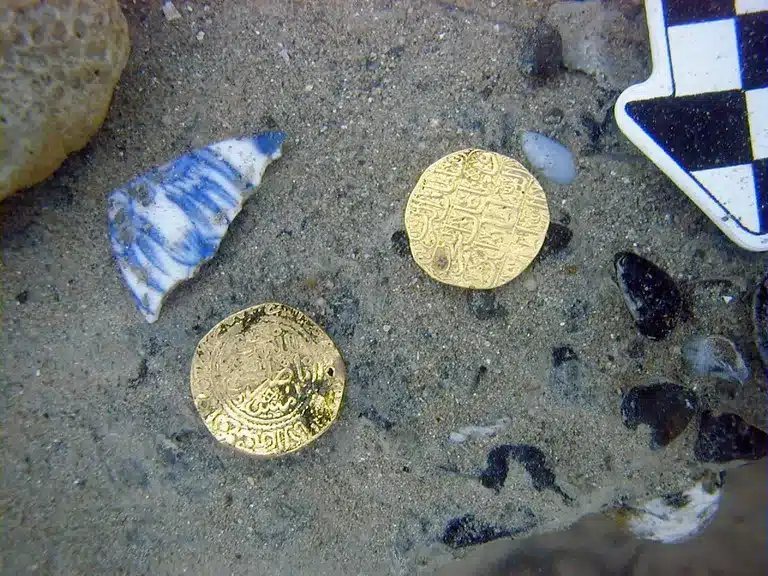
In addition, gold coins with Arabic script and fragments of fine porcelain were recovered from the seabed. To date, more than 3,300 artifacts have been retrieved, though many more still remain under the sand and silt.
An island turned pirate fortress
The pirates took their prize about 400 miles west of Réunion to Madagascar to divide the spoils. The researchers write that European pirates chose Île Sainte-Marie because its protected anchorages were near major sea lanes. The island was also known for its "lack of colonial governance," which made it an ideal base.
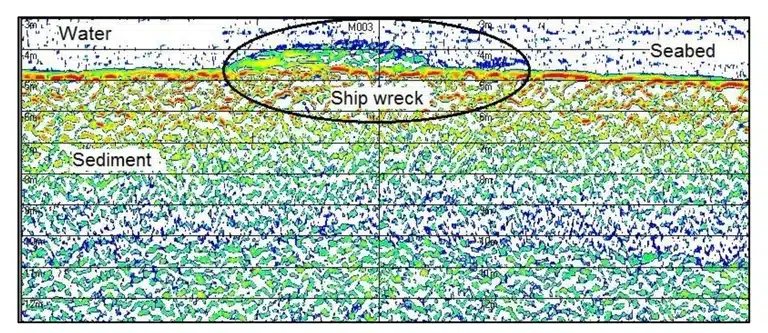
Clifford added that seven to ten ships were wrecked or scuttled off the island during the golden age of piracy, and "at least four pirate ships or their prizes lie in the harbor itself." A sonar image and a mosaic of the harbor floor show overlapping piles of ballast stones from different vessels.
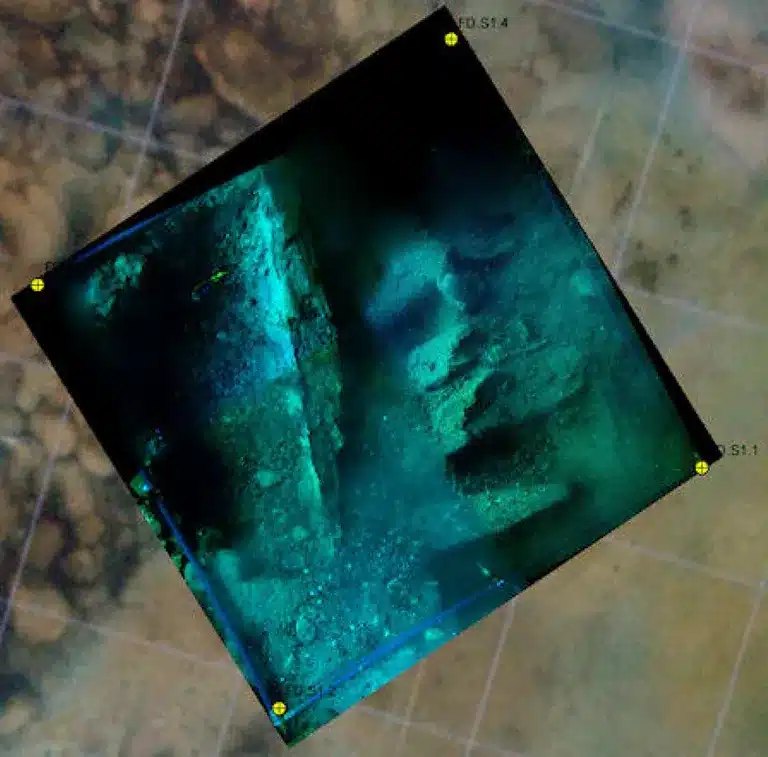
Agostini told the same source that the silt and sand covering the wreckage make further work difficult. He also said that archaeologists have previously overlooked the island and the scientific treasures it holds. "Ideally," he said, "future fieldwork will lead to a more in-depth analysis of the many ships that sank here."


Letters