
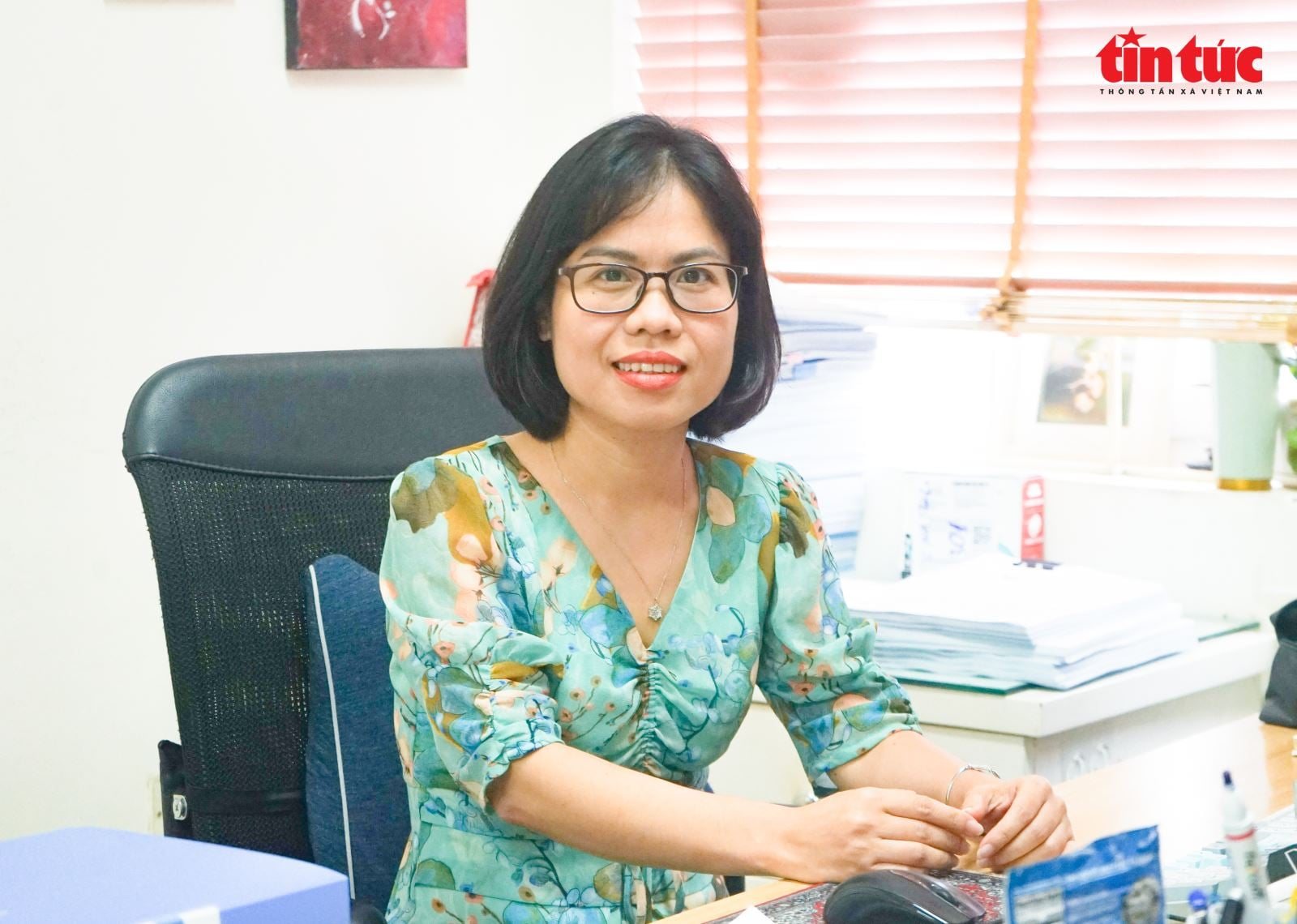
A young mother, barely thirty years old, could not speak to her newborn daughter. Amyotrophic lateral sclerosis, or ALS, a disease that affects the nervous system, had deprived her of the ability to communicate. But with the help of the BLife technology, she was able to compose a sentence on a screen. Her first words to her daughter were: "Now Mom can teach you." This case, as Dr. Ngo Thi Duyen, a lecturer at Hanoi University of Science and Technology, told journalists, has been one of the most memorable in her work.
Ngo Thi Duyen has worked in information technology for almost twenty years. Since 2019, she has been one of the key participants in the BLife project. It is a system that helps completely paralyzed and mute people connect with the world through eye movements. By looking at symbols on a screen, a person can form sentences, pronounce them aloud, and even use social media or watch television. The first version of the system was launched in 2020.
Initially an experimental device, BLife now helps many ALS patients across Vietnam. The system is used both at home and in several hospitals, including Military Hospital No. 103 and the Vietnam-France Hospital. This experience, according to Dr. Duyen, opened up a new direction for her: developing technologies for vulnerable groups of the population.
This experience helped me to very clearly realize the social and humanitarian value of scientific research.
— Ngo Thi Duyen, PhD
Ngo Thi Duyen heads a research group that applies artificial intelligence and eye-tracking technology to help children with developmental differences. The group was formed about four years ago. For example, the system helps to understand what children with autism pay attention to and what interests them. Based on this data, teachers can design a more suitable lesson plan. The team is also developing tools for the early diagnosis of reading and numeracy disorders in children, as well as a mobile learning app.

According to Dr. Duyen, such research comes with difficulties. Besides technical problems, there are social and psychological barriers. In Vietnam, she notes, physical health is often given more attention than mental health, although communication skills are extremely important for quality of life. In addition, families with a paralyzed member often face financial difficulties and psychological pressure.
Working with children has its own specifics too. "Every child is a completely unique world," says Ngo Thi Duyen. Even with the same diagnosis, such as autism, manifestations can vary widely, which complicates the creation of a universal technology. Another problem is parents' lack of information. Many are unaware of disorders such as dyslexia, and it is psychologically difficult for them to acknowledge that their child has developmental difficulties.
But there is also great joy, the scientist says: "When a technological solution helps patients communicate better or supports a child in overcoming difficulties, we feel truly happy. At that moment, scientists understand that the results of their research are not just on paper, but have truly changed people's lives."


Letters