
Dog breeders have produced breeds weighing from two kilograms, like the chihuahua, to eighty, like the mastiff. The extremes at either end of that range pay for it in years of life. A study published in the journal Science suggests that part of this price is written into their DNA.
A team of scientists led by Noah Snyder-Mackler of Arizona State University analysed blood samples from 894 dogs taking part in the Dog Aging Project. They found that in large dogs, the chemical marks on DNA that suppress the activity of "jumping genes" disappear about a third faster with age than in small dogs. Although the study does not yet prove that this is what shortens dogs' lives, it points to a possible molecular mechanism.
"Jumping genes," or transposons, are stretches of DNA capable of copying themselves and inserting their copies elsewhere in the genome, sometimes damaging important genes. Their activity is normally held in check by special methyl groups — the very chemical marks the scientists studied. With age, these marks become fewer, and they disappear fastest in large breeds.

This observation fits well with data on life expectancy. For example, according to a study of more than half a million dogs in Britain, the average German Great Dane lives 10.6 years, while a miniature dachshund lives 14 years. Back in 2013, another group of scientists calculated that every two kilograms of body weight takes about a month off a dog's life. As one of the authors of that work, Cornelia Kraus, put it, "their lives seem to unspool at an accelerated pace."
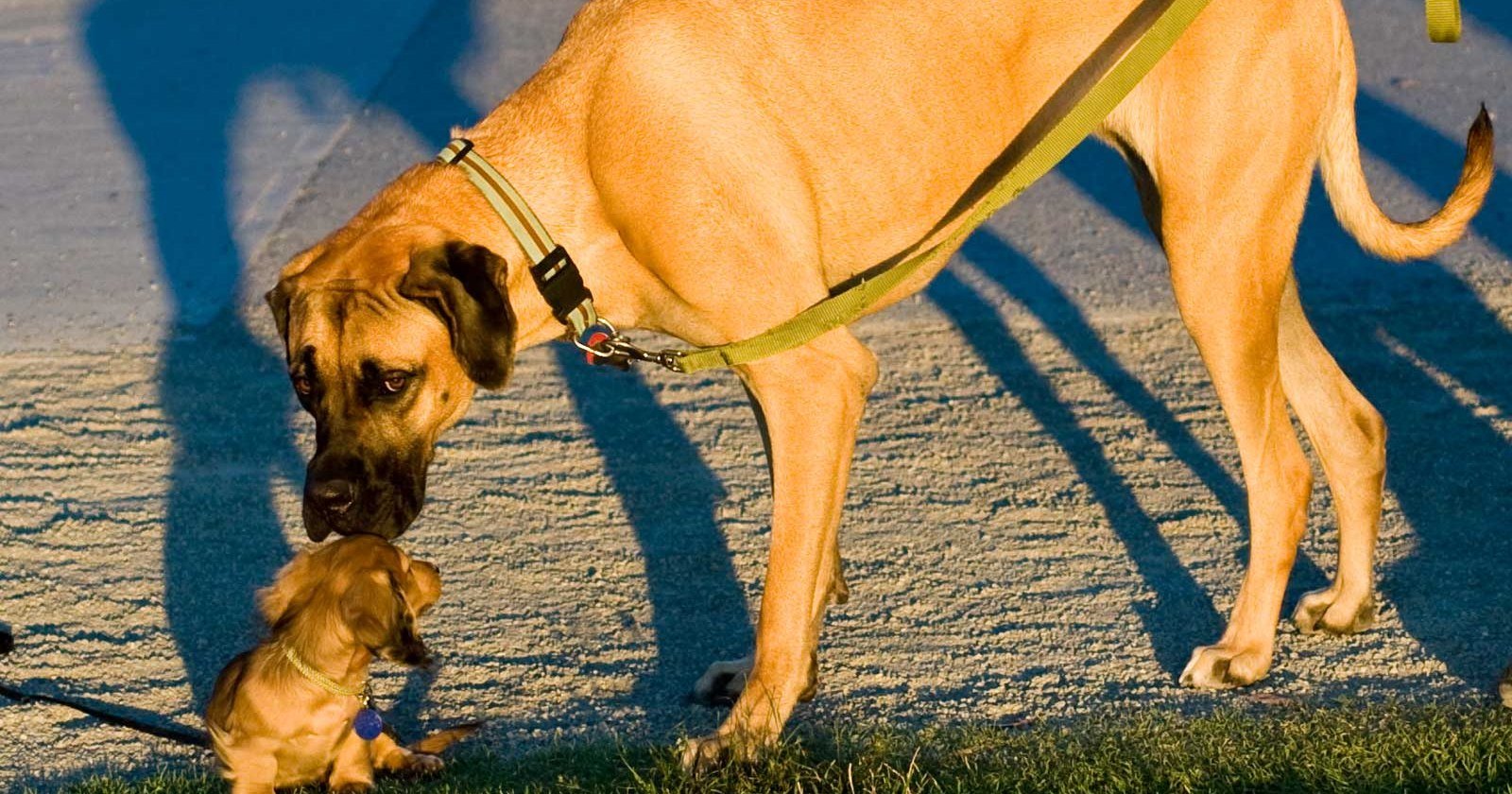
Using the collected data, Snyder-Mackler's team created so-called epigenetic clocks — a way of determining a dog's biological age from the state of its DNA. These clocks showed that large dogs do indeed age faster at the molecular level.
The scientists stress that their work revealed a correlation, not a cause and effect. The study compared different dogs at a single point in time rather than tracking each animal's life from puppyhood to old age. Therefore, it cannot yet be claimed that weakened control over "jumping genes" is what shortens dogs' lives.

Dog owners should not yet change their pets' care on the basis of these data. Specialists advise waiting until the molecular changes are linked to specific diseases or to deterioration in the animals' condition. Clinical trials are now underway for drugs that may slow ageing in dogs: one is being developed by the American company Loyal, and another, with the drug rapamycin, is being run by the Dog Aging Project itself. Owners of dogs of a certain age and weight can apply to take part in the latter via the project's website.


Letters