
Giovanni Barontini, a physicist at the University of Birmingham, has shown how the course of events in a quantum system can be tracked without recourse to external time. To do so, he observed changes within a cloud of 24,000 ultracold atoms. The work is published in the journal Physical Review Research.
The experiment touches on one of the fundamental problems of physics: defining time in a closed system, such as the universe, beyond which there is no observer with a clock. To study this question in the laboratory, Barontini used a Bose–Einstein condensate, a special state of matter in which atoms behave as a single quantum object. The atomic cloud was placed in an isolated trap and divided into two parts by an optical barrier.
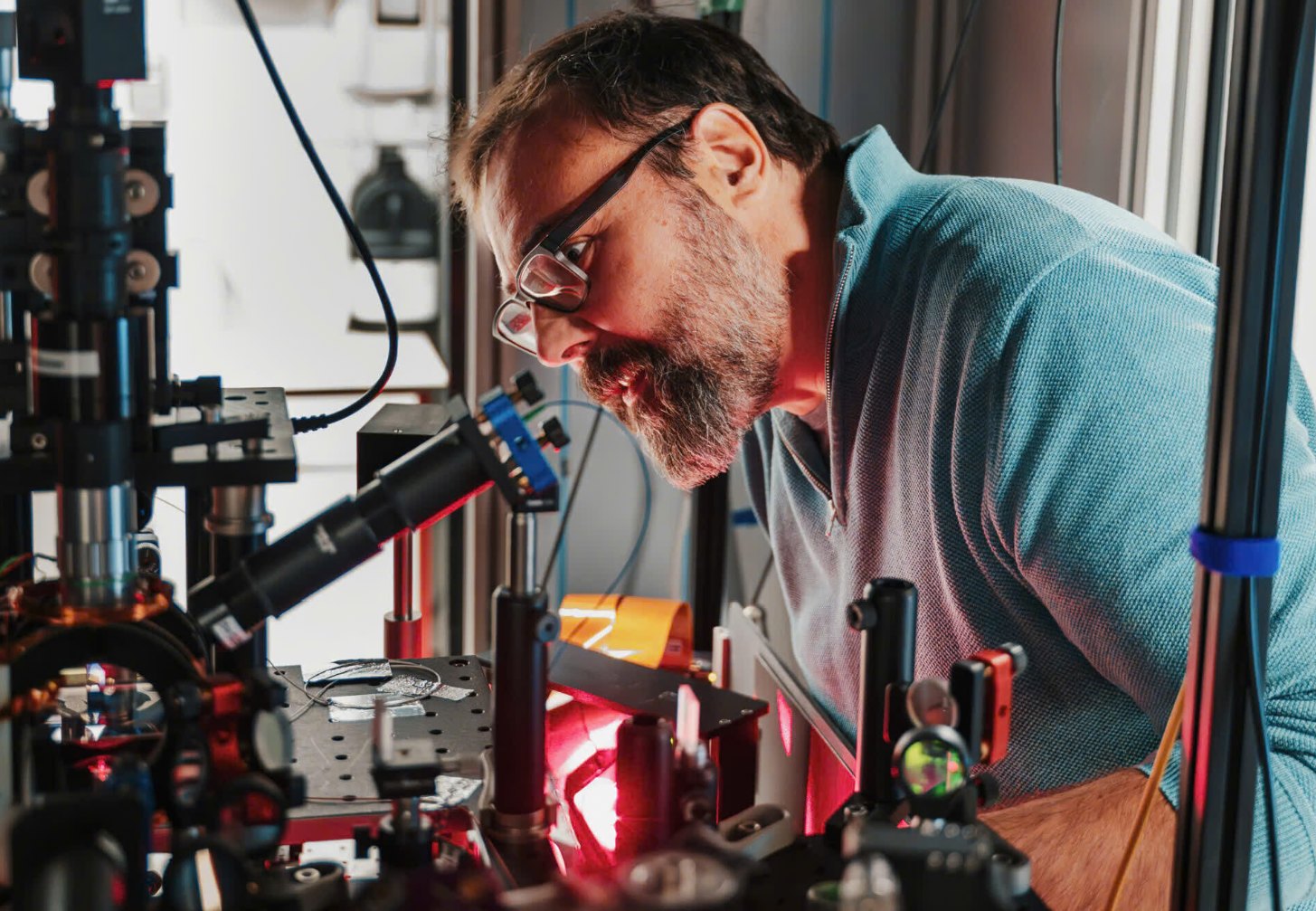
During the experiment, one part of the atomic cloud repeatedly expanded and contracted. The scientist established that the sequence of these processes could be determined from the change in the distribution of particles and the associated entropy, a measure of disorder in the system. This approach made it possible to create an internal time scale that preserved the order of events.
Drawing on these data, Barontini derived the Schrödinger equation, which describes the behaviour of quantum systems, with this internal count used in place of the familiar time parameter. The model successfully described what happened in the experiment. As the paper notes, the study does not prove that time is an illusion, but it offers a different way of describing physical processes.


Letters