
Among the many establishments in Ho Chi Minh City that have been trading for decades, Banh Cuon Tay Ho is a name familiar to several generations of residents. For more than sixty years this family eatery on Dinh Tien Hoang Street in the Tan Dinh district has preserved the traditional taste of banh cuon, steamed rice rolls, and it remains a place where many come for a proper Saigon breakfast. In 2026 the Michelin Guide once again included it in its Bib Gourmand category, which recognises places serving good food at reasonable prices.
The listing has drawn still more attention to a spot that was already popular. In the days after the list was published, the number of customers rose noticeably, and at times almost every table was taken. Besides local residents, foreign tourists are also coming to try the family dish that has been made here for so many years.
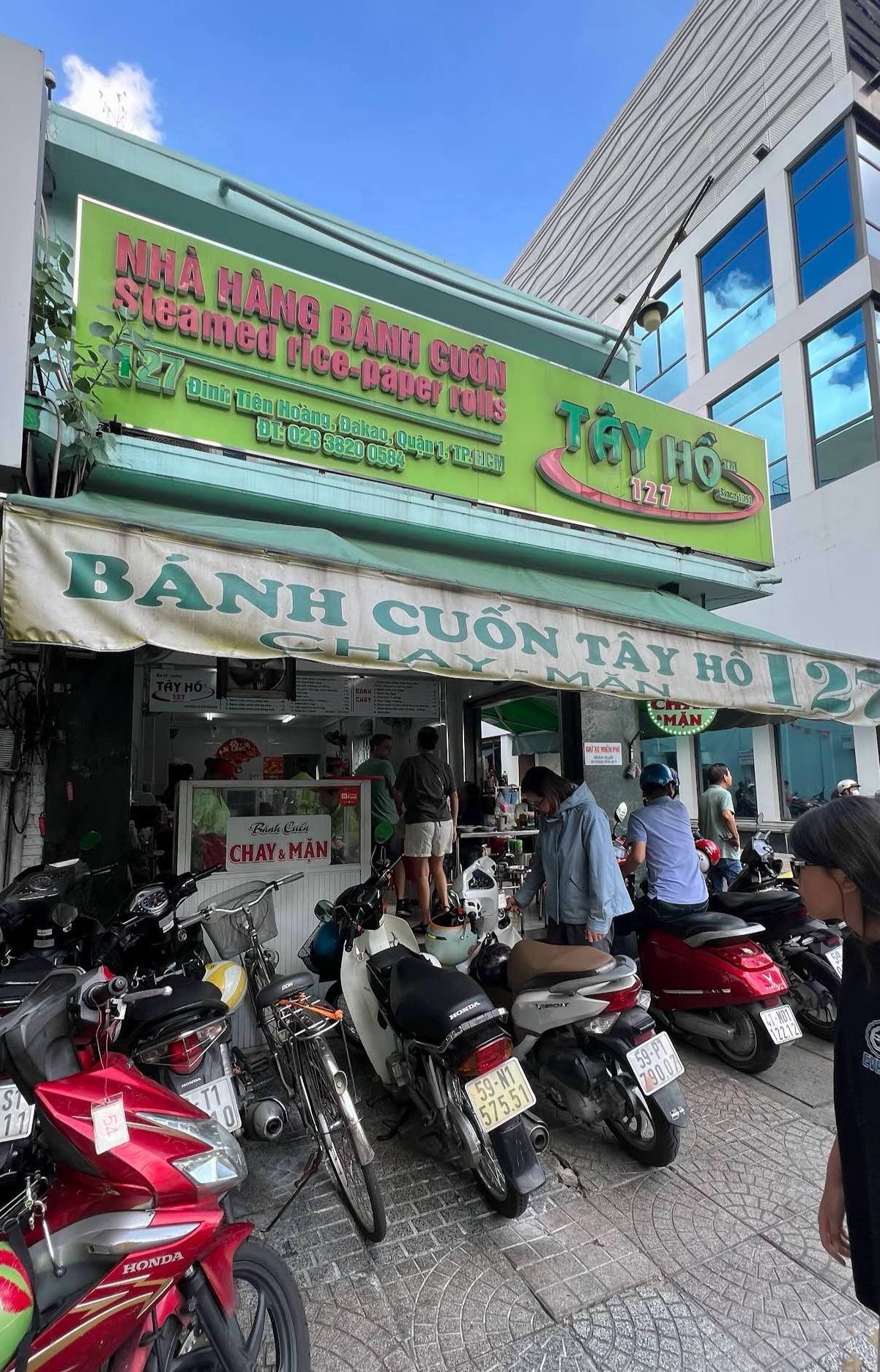
One of the restaurant's most recognisable features is its owner, 52-year-old Tran Thi Thuy Loan, who always greets guests in an elegant Vietnamese ao dai. She has a hand in a great many tasks, from making the rolls and settling bills to waiting on tables, yet she invariably wears the national dress. Her collection runs to almost 450 outfits, allowing her to go a long time without repeating one.
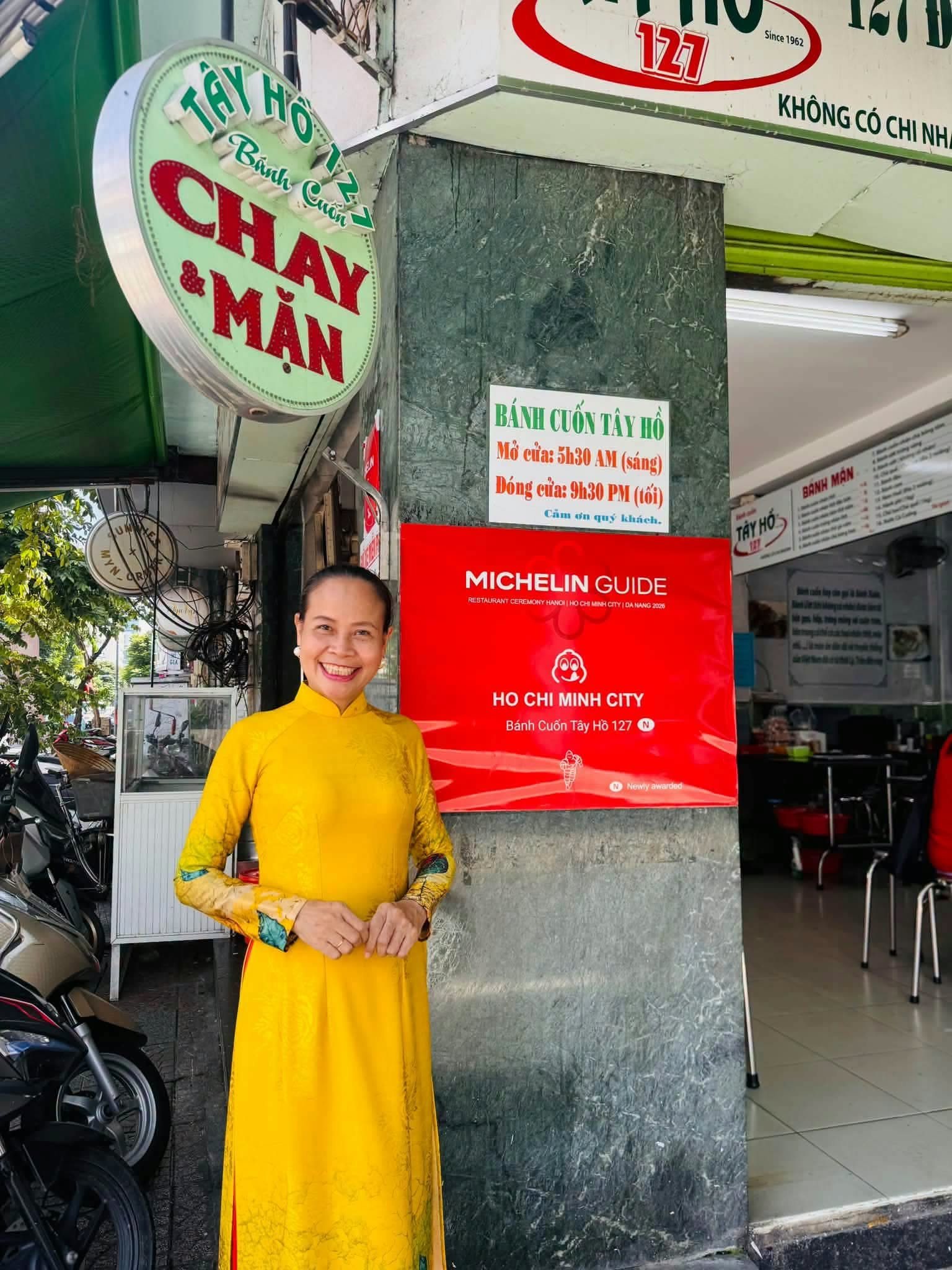
An owner with a collection of 450 dresses
Every day Mrs Thuy Loan rises at around five in the morning, does her exercises, then chooses an outfit and sets off for work. Rather than the practical clothing usual among people who work in catering, she always opts for the traditional ao dai. From opening time to the morning rush, the sight of her, a woman in a flowing dress working deftly and welcoming guests with a smile, has become the signature of Banh Cuon Tay Ho.
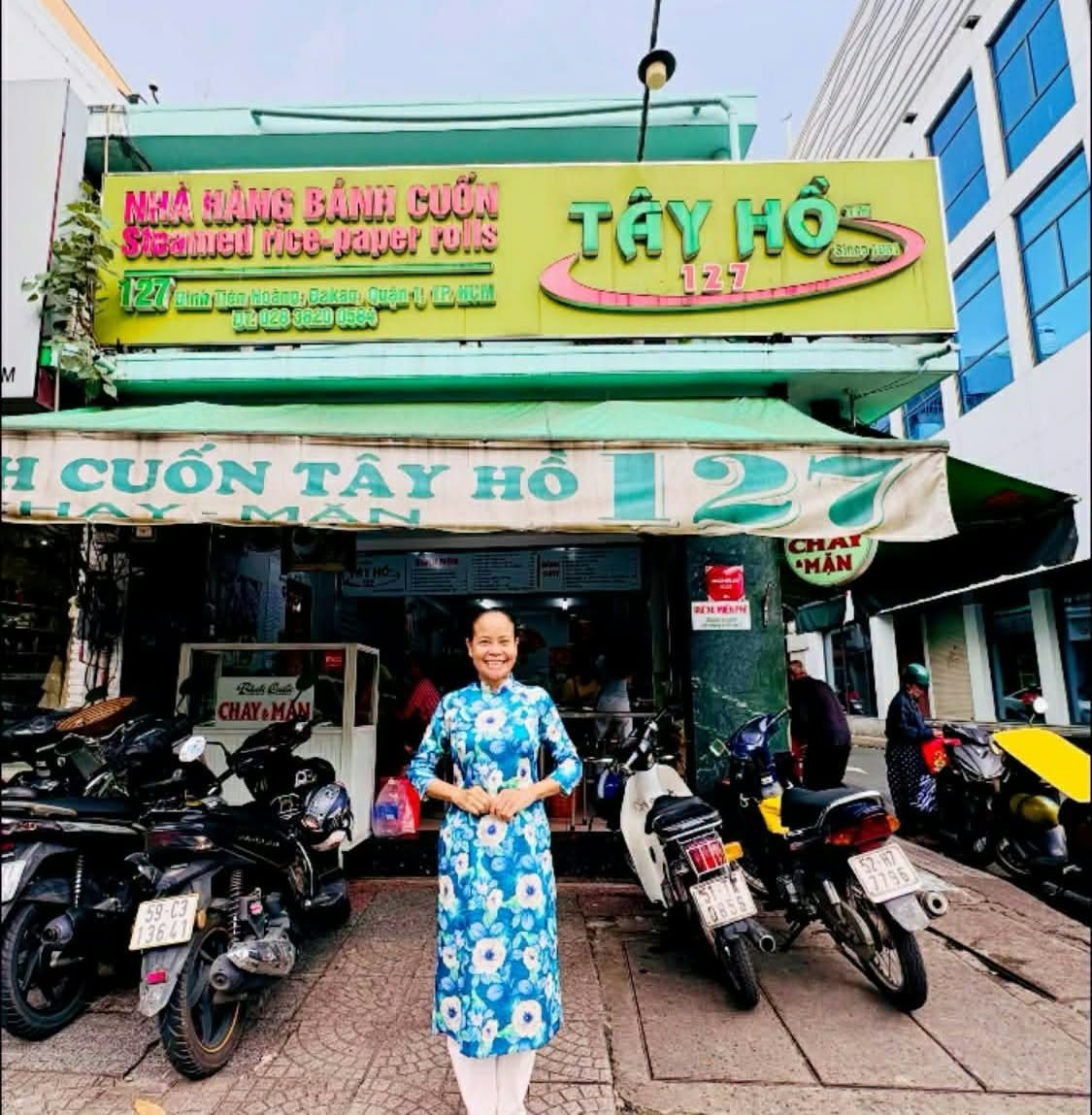
Her wardrobe holds some 450 ao dai, enough to wear a different one almost every day. For festivals she often has new ones made, adding to the collection. Remarkably, for all their number, Mrs Loan remains faithful to the traditional high-collared cut, with no excessive stylisation. For her, wearing the ao dai is not merely a personal passion but a way of showing respect for Vietnamese culture and for the restaurant's guests.
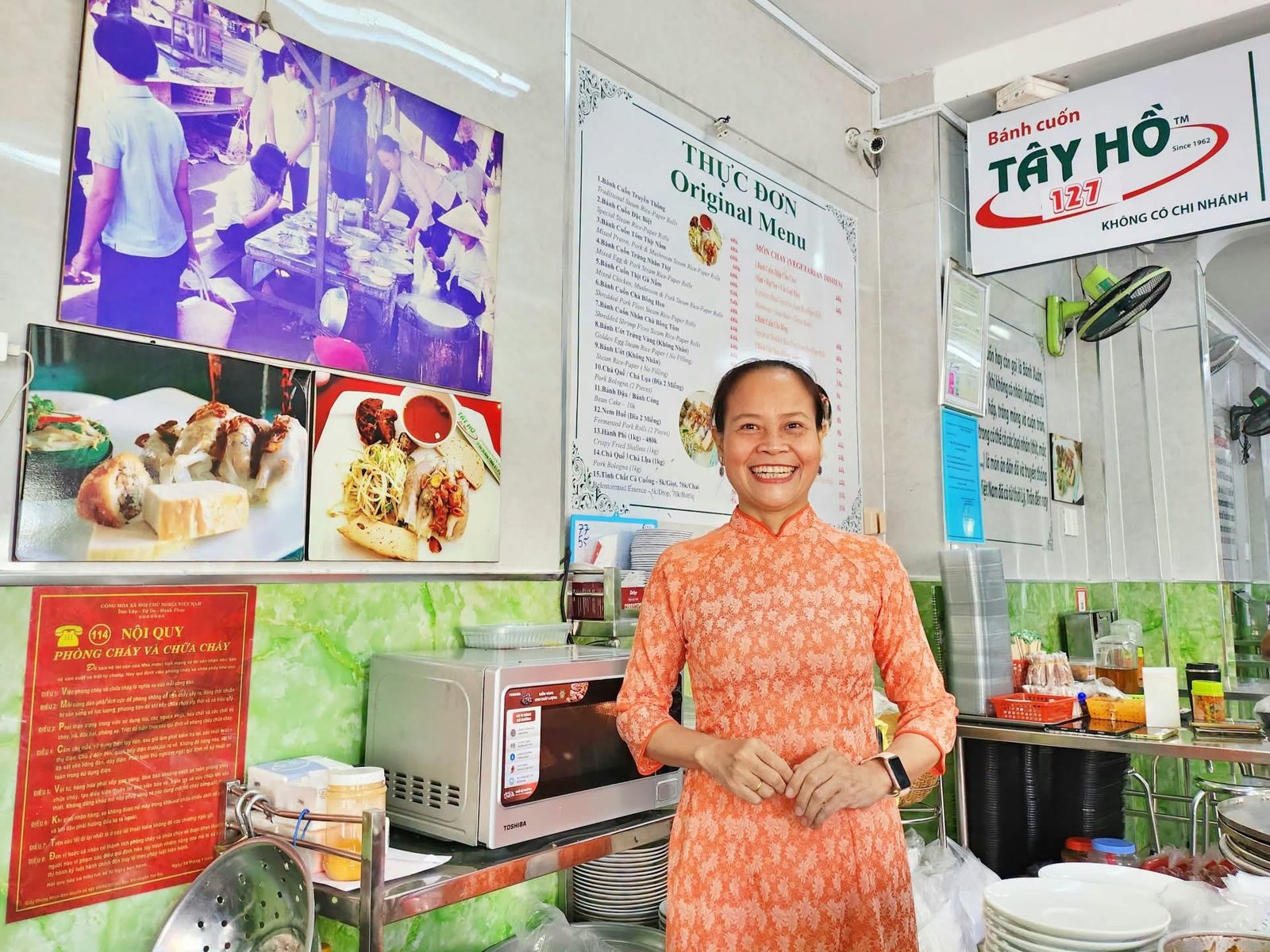
The habit began about three years ago. At first Mrs Loan felt a little self-conscious wearing an ao dai at work, since there is always so much to do in the eatery. But compliments from customers pleased her and gave her strength. Foreigners often visit, and the owner believes her dress helps to show them something of the Vietnamese woman and rounds out the cultural experience of the traditional dish.
To keep herself energetic and alert, she does yoga and exercises first thing in the morning. Mrs Loan is convinced that in the restaurant business it is not only good food that matters but also a warm and attentive welcome for guests. That is why, although she has worked in the eatery for many years, she still often cooks herself and chats with customers. For regulars, the image of her in an ao dai has become an inseparable part of Banh Cuon Tay Ho.
More than 60 years of family tradition
Behind the story of Banh Cuon Tay Ho stands a family, several generations of which have devoted themselves to making steamed rice rolls. Mrs Thuy Loan is the eldest daughter-in-law of the restaurant's founder, Tran Thi Ca (1919–2006). Mrs Ca came from Ha Nam province, moved to Saigon and in 1962 opened a stall selling banh cuon.
The first spot where she traded was beside a temple honouring Phan Chau Trinh, a figure of the national liberation movement, on what was then Rue Gallimard and is now Nguyen Huy Tu Street. This is where the name Tay Ho comes from: Tay Ho was Phan Chau Trinh's pen name. Because the stall stood next to the temple dedicated to him, local people took to calling the rolls "banh cuon Tay Ho". A name that originally referred to a place eventually became a brand.
The little stall grew into an eatery that became a familiar haunt for residents of Da Kao and the surrounding neighbourhoods. Years later, the rolls are still made to the traditional recipe for guests who first came here in their youth and are now grandparents themselves.
After Mrs Ca's death in 2006, members of the family carried on the business. Mrs Loan, together with the other women of the family, kept it going, preserving the recipe and the flavour handed down by her mother-in-law. For the past two years she has taken the leading role in running the place. The family has no wish to turn it into a modern, showy café. On the walls hang black-and-white photographs of Mrs Ca and her stall, a corner of remembrance that helps guests picture the restaurant's journey from its earliest days. There is also a description of the dish in Vietnamese and English, explaining that it is a traditional dish made from rice flour batter steamed into thin sheets, which are then rolled around a filling of meat, wood ear mushrooms or other ingredients.
According to Mrs Loan, the family still follows the recipe she received from her mother-in-law. She recounted that some guests who have lived abroad for many years come to the eatery every time they return to Vietnam, to taste once more the flavour bound up with their childhood memories. There are also elderly customers who think nothing of making a long and costly journey for a few plates of rolls. For Mrs Loan this means a great deal, and it is the reason the family strives to keep up the quality of its food.
What makes Tay Ho rolls special
The menu at Banh Cuon Tay Ho is fairly varied: there are rolls filled with pork, with prawns, with egg, and with pork or shrimp floss. There are vegetarian options, too. What sets the filling apart is that, instead of the minced meat with wood ear mushrooms used in many other places, it combines finely chopped meat with diced jicama, also known as Mexican turnip. Eating it, you notice the tenderness of the meat and the light crunch of the sweetish jicama, which gives the dish its distinctive taste.
The rolls are steamed right at the counter, filled immediately and served hot. The thin, soft yet slightly springy rice wrapper and the well-judged seasoning of the filling together make for a simple but appetising dish. An indispensable element is the fish sauce for dipping. Many customers note that the sauce has a rich, balanced sweet-and-salty flavour that complements the dish.
With the rolls one can also order pork sausages from Hue and two kinds of Vietnamese pork loaf, cha lua and cha que. An intriguing detail: the restaurant serves an essence of the giant water bug Lethocerus indicus, which can be ordered by the drop to give the sauce its characteristic aroma. It is a reminder of the traditional way banh cuon is served in northern Vietnam.
A portion of rolls costs between 40,000 and 64,000 dong, while a special portion comes to around 72,000 dong. Extras such as pork loaf and sausages are charged separately, at 10,000 to 24,000 dong. A drop of water bug essence will set you back 5,000 dong. For a restaurant in central Ho Chi Minh City this may be a little dearer than ordinary street stalls, but guests are offered a wider choice of fillings and extras.
Reviews of Banh Cuon Tay Ho often praise its thin batter, generous filling and quick service. One guest, who says he has known the place since 1997, remarked that the taste has remained as familiar as ever. He singled out the fish sauce, which in his view is one of the restaurant's defining features.
The rolls here are steamed on the spot; they are thin, soft and springy. The filling is lean pork, diced and well seasoned, mixed with jicama, also diced. It crunches, and the flavour is quite unique.
— from a customer's review
There are, however, those who find the prices rather high, particularly if one orders the extra sausages and pork loaf, which are not included in the basic portion. Some regulars have also expressed the wish that the filling keep its former quantity of meat, so as to preserve the taste they have come to love.
Even so, the appeal of Banh Cuon Tay Ho lies not only in a plate of hot rolls. It is also the story of a small stall opened in 1962, of a recipe passed down from generation to generation, and of a woman in an ao dai who tirelessly welcomes guests every day. For those who have been coming here for decades, a return visit is not simply breakfast but a chance to savour a familiar taste once more and to touch the memories kept here, in the very heart of a changing Saigon.


Letters