
At Maynooth University in Ireland, researchers have built a computing system that works without silicon chips or electrical pulses. Billions of DNA strands, placed in a test tube of water and salt, join together on their own into a structure that represents the result of a mathematical operation. In one experiment, the system added numbers in 30 seconds.
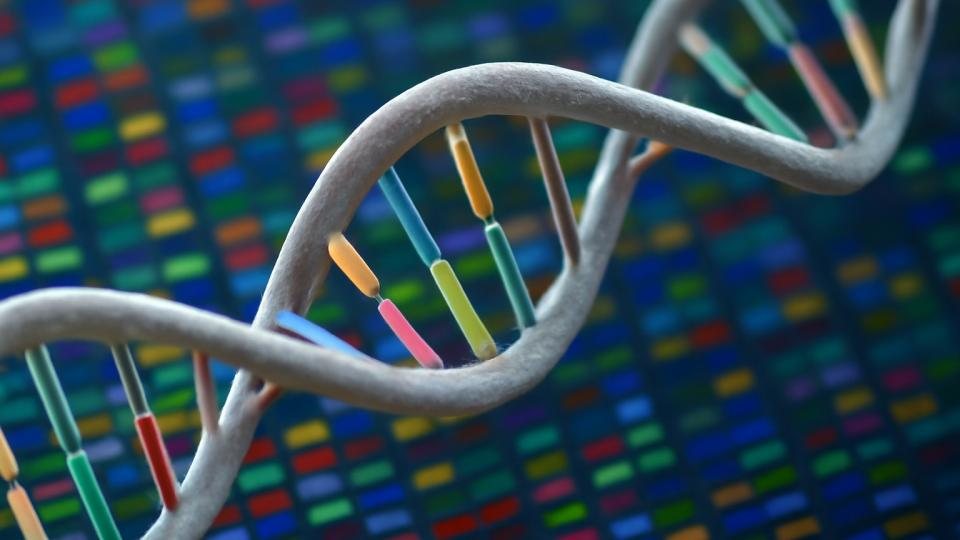
What sets it apart from conventional computers is that the calculation happens through thermodynamics: the molecules naturally tend toward their most stable state, and that state is the solution to the problem. Silicon processors need a continuous power supply for every step of a calculation.
As the authors write in their paper for the journal Nature, their development is one of the most complex and fastest molecular computers to date. The system was able to carry out 25 different calculations in a row, including adding numbers in the range from 11 to 34 million. More complex, 100-bit operations took up to 14 hours. In speed, such devices cannot yet compete with silicon ones, but they have the advantage of energy efficiency.
The calculation is started by heating the DNA mixture. The liquid then cools, and the strands begin to interact. Short DNA fragments bind to a long scaffold molecule, forming a specific spatial structure. "The molecules interact, form a structure, and that structure is the answer," explains Professor Damien Woods, one of the leaders of the study.
According to Woods, the goal of the work was not to replace laptops but to find alternative ways of processing and storing information. In Ireland, for example, 23% of electricity is consumed by computing and data storage. In the future, such molecular systems could find applications in medicine, for instance working inside cells to detect disease, where the lack of a need for electrical power becomes a decisive advantage.


Letters