
Kim Lan, a village on the left bank of the Red River on the outskirts of Hanoi, has long drawn the attention of historians and archaeologists as one of the most important centers of ancient ceramics in the Red River Delta. It is not as famous as neighboring Bat Trang, but it holds a deep cultural layer in which pottery is not merely a way to earn a living but the living memory of a traditional Vietnamese community.

The history of Kim Lan ceramics rests not only on oral tradition and family chronicles but also on rich archaeological layers. Excavations carried out by Vietnamese and Japanese scholars in 2001, 2003 and 2009 at Ham Rong, on the bank of the Red River, uncovered tens of thousands of pottery shards, casting molds and traces of ancient kilns dating from the eighth to the eighteenth century.
These finds allowed scholars to establish that pottery production in Kim Lan began no later than the eighth century and flourished under many dynasties, especially from the eleventh to the fourteenth century, during the reigns of the Ly and Tran dynasties. If Bat Trang was renowned for its decorative ceramics, Kim Lan was regarded as the birthplace of ceramics for the home. Its wares were not elaborately finished, but they were simple, harmonious and practical.
From the eighteenth century, however, pottery in Kim Lan gradually fell into decline. The name "Kim Lan ceramics" was forgotten, and many came to believe that Bat Trang had been Hanoi's only pottery center.
Kim Lan's revival began in the 1970s, when local artisans set about restoring the village's heritage. By the 1990s the effort had gathered momentum, with some 750 kilns operating in the village. The artisans' persistence won official recognition on January 23, 2025, when Kim Lan ceramics were added to the list of national intangible cultural heritage. In January 2026, 21 artisans were awarded the honorary titles of Meritorious Artisan and People's Artisan. These honors are not merely personal achievements but testimony to the resilience of a community of craftspeople that has endured for centuries.
Where Tradition Meets Modernity
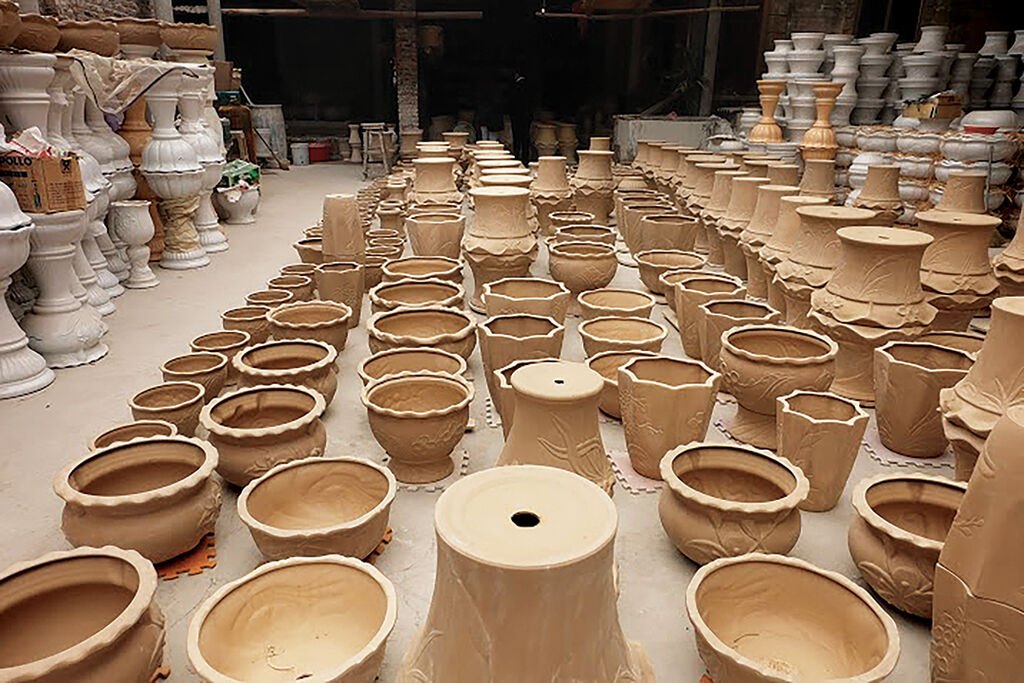
Today, pottery in Kim Lan is a blend of tradition and modernity. More than 350 kilns are in operation here, and each workshop turns out hundreds of ceramic pots and vases every day. Pieces made in ready-made molds with printed patterns are popular and are also supplied to international markets.
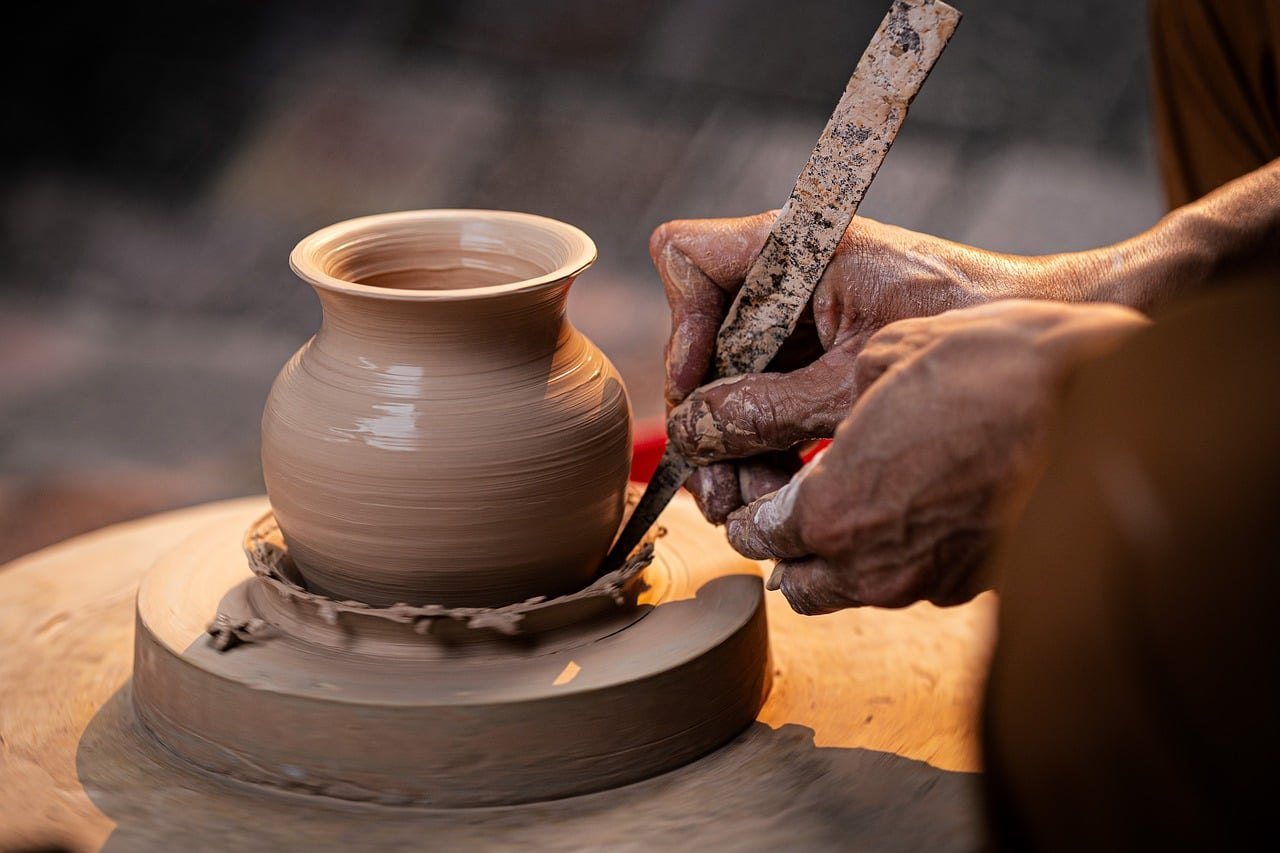
Many families and young artisans nonetheless remain committed to handwork. Among them is Pham Van Nguyen, who specializes in wheel-thrown pieces and creates unique, high-quality objects. In his skilled hands, a shapeless lump of clay becomes an elegant and distinctive piece.
A potter must truly love his craft, burn with creativity and have the perseverance and patience to make things on the wheel that will please both the maker and the viewer.
— Pham Van Nguyen
Kim Lan is now not only a traditional craft village but also an increasingly attractive destination for tourists. Visitors can view the valuable archaeological finds at Ham Rong and tour the Kim Lan Ceramics Museum, Vietnam's first community archaeological museum, run by the local authorities and residents. The village also has a Center for Product Design, Display and Promotion. Together, these sites form a distinctive cultural and tourist setting. Visitors can also immerse themselves in the tranquil atmosphere of Kim Lan's old pagodas, communal houses and shrines, standing peacefully along the Red River.
Today, as heritage preservation intertwines with innovation and the growth of tourism, Kim Lan serves both as a guardian of centuries-old craftsmanship and as a vibrant cultural hub. Its story goes on, carried forward by generations of artisans and flowing through time like the Red River past its shores.


Letters