
In Burbank, California, Disney held a demo day for Accelerator, its startup support program. This year's dominant theme was artificial intelligence. Only a year ago Hollywood regarded the technology with suspicion; now the major studios are openly embracing it. Disney's program offers a glimpse of where the industry is headed.
“We work with the technology to understand whether it can fit into our workflows, so the artist is involved every step of the way,” David Min, Disney's vice president of corporate innovation, told reporters.
The latest cohort of the program, which has been running since 2014, included five companies. Over 15 weeks they put their technologies to work across various Disney divisions, mostly in the theme parks. The company prefers to work with mature startups that can deliver value right away. This year's participants include three companies valued at more than a billion dollars: Simile ($2 billion), FieldAI ($10 billion) and Physical Intelligence ($20 billion).
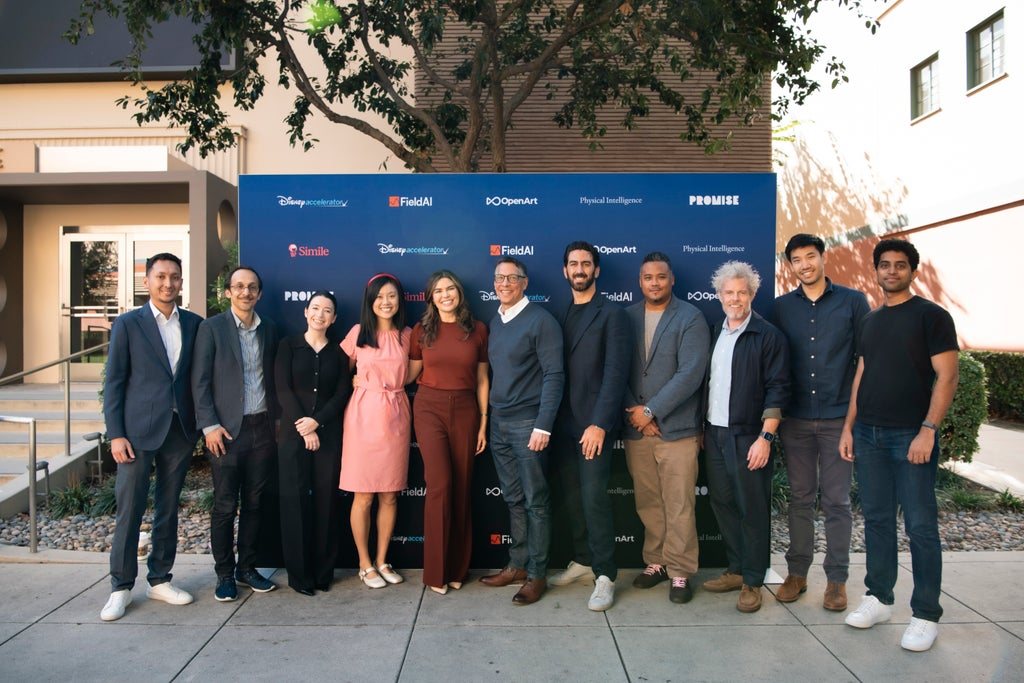
Opening the event, Disney CEO Josh D’Amaro said the company would actively explore new technologies to help its creators deliver more engaging and personalized entertainment around the world.
Hybrid Shoots and “Vibe Directing”
Two of the startups, Promise and OpenArt, focus on content creation. The studio Promise Advanced Imagination has built MUSE, an operating system for so-called hybrid shoots. Actors are filmed in a “gray box,” a stage with neutral lighting and a plain backdrop where ordinary crates may stand in for props. Artificial intelligence fills in the background, sets and objects in near real time, making it possible to create vast worlds in a small space. Technology of this kind, similar to green-screen filming but more advanced, is already being used in movies. Dave Clark, Promise's creative director, says it offers enormous flexibility and lets a director focus on the story rather than on the budget and shooting schedule. Disney is not yet working on any projects that use the gray box.
OpenArt offers a simple interface through which anyone can create short videos using text prompts. Its chief executive, Coco Mao, likened the process to “vibe directing”: the user describes the desired result, and the system produces it. Disney is considering using the technology to make videos for older songs in its catalog or for advertising campaigns. It could also be handed to audiences so they can create their own work. OpenArt's tool includes a copyright protection system from CopySight that checks whether generated content infringes on anyone else's intellectual property.
AI in the Physical World
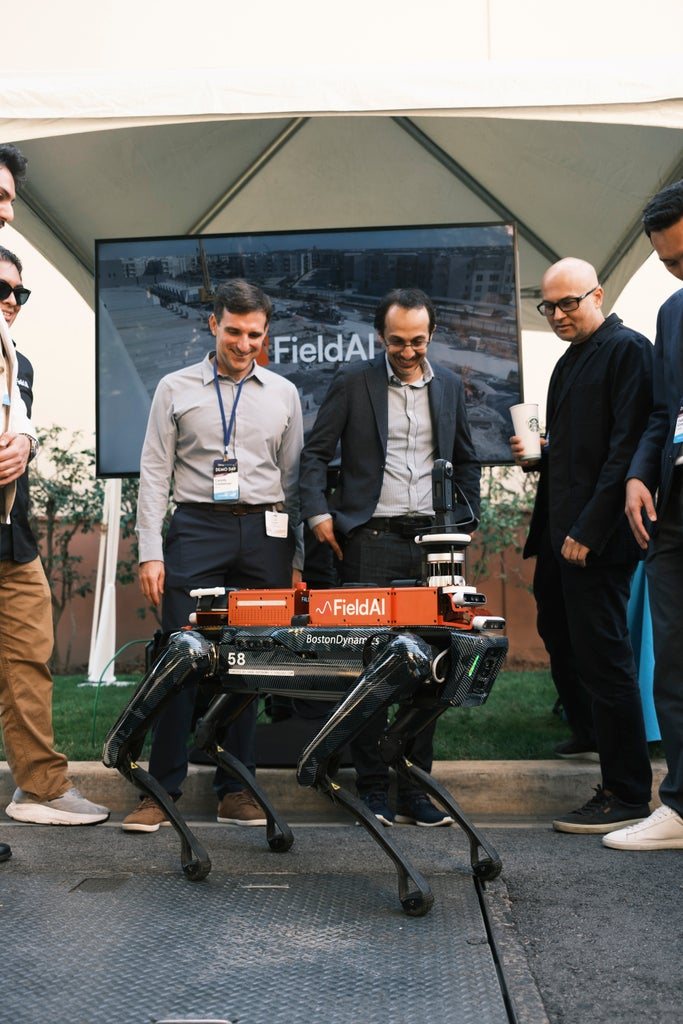
Three of the startups applied artificial intelligence to controlling physical objects. FieldAI showed Boston Dynamics robots fitted with its own hardware and software. Thanks to a camera and an AI system, the robot recognizes the objects around it and moves about without GPS or a preset program. Chief executive Ali Agha explained that the company's technology can be installed on any robot. He hinted that it is already being used in the BDX droid that appears in the Star Wars area of the theme park. In its presentation, Disney showed a concept in which robots modeled on characters from the animated film Cars direct traffic in a parking lot on their own.
The startup Physical Intelligence also works with robots but tackles more delicate tasks, such as manipulating small objects. At a theme park, its technology helps robots wash and fold 3D glasses. The job is hard to automate because the glasses vary in size and in the way they are stored. Artificial intelligence allows the robots to handle fragile items with the right amount of force and dexterity. The company took on the task because park employees find it unpleasant and monotonous: it is done in a small, hot room.
The demonstration also featured Haddy, a participant in last year's program. It uses artificial intelligence to enable robotic arms to quickly and precisely print large three-dimensional objects for theme parks, such as building facades. This will make it possible to refresh sets and scenery faster.
Digital Twins
Simile creates “synthetic crowds” made up of digital twins of real people. To do so, the startup surveys between 20,000 and 50,000 people every week and has already built a database of a million participants. From these, a target group can be selected, such as likely Disneyland visitors, and a virtual study run to get a rough sense of how people will respond to a new product or service.
For Disney, Simile is modeling how guests use the digital reservation system. “We're looking for ways to make the digital booking process simpler and better for guests and to remove the points of friction,” said the company's co-founder, Lainie Yallen.


Letters