
The exhibition "Busy With the Musical Society," at the State Tolstoy Museum, tells the story of the writer's love of music and of how he helped organize Russia's musical life together with the musician brothers Anton and Nikolai Rubinstein. Tolstoy called music "the highest art in the world" and "the shorthand of the emotions."
In the late 1850s, Leo Tolstoy drew up a "Project for a Musical Society." The exhibition displays the draft of this document, which sets out the idea of making classical music accessible to the general public. The society was to "use every means to have the finest classical works performed as many times a season as possible by the finest artists, both Russian and foreign." In January 1858, an entry appeared in the writer's diary: "Busy with the musical society." He discussed the idea with Nikolai Rubinstein and his brother Anton, who was then establishing the Russian Musical Society in St. Petersburg, the forerunner of the conservatory.
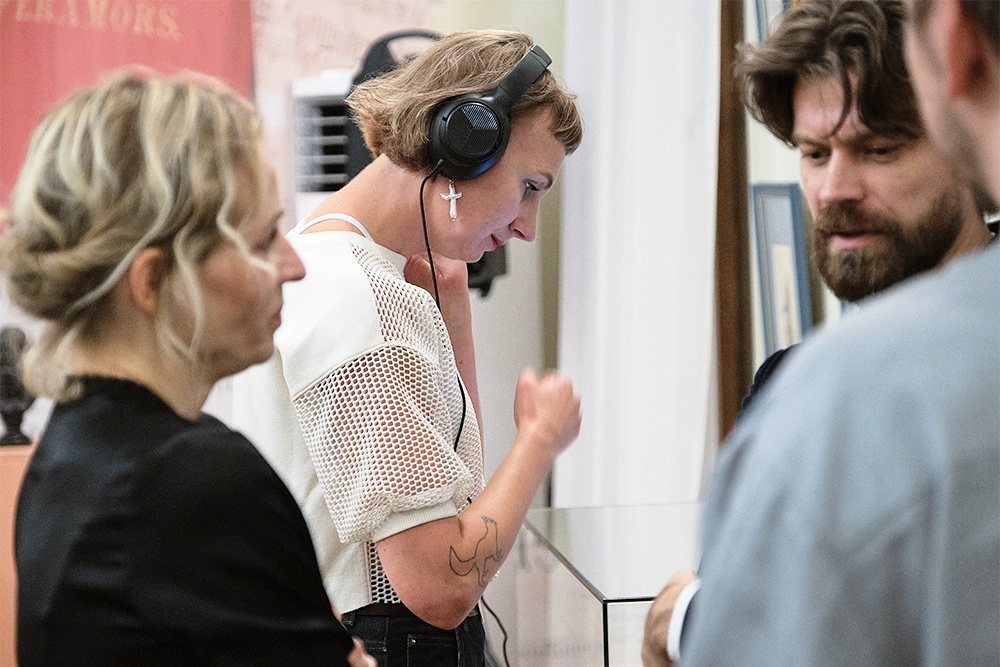
The exhibition was prepared by the museum and the Anton Rubinstein Heritage Center. Among the items on display are Anton Rubinstein's music manuscripts, photographs of the brothers and posters for their concerts. Tolstoy attended the Rubinsteins' solo recitals. The composer Pyotr Tchaikovsky recalled how Nikolai Rubinstein organized a concert of his new music at which the writer wept while listening to the First String Quartet.
Visitors can also see a painting by Leonid Pasternak of Anton Rubinstein playing at the Tolstoys' house during a concert to aid starving peasants. Also on display is the manuscript of the vocal score of Rubinstein's opera Feramors. Tolstoy attended a rehearsal of the opera and was outraged at the way the conductor, Vasily Safonov, insulted the musicians. The incident became the starting point for his essay What Is Art?, in which he reflected on the gulf between aesthetic aims and morality.
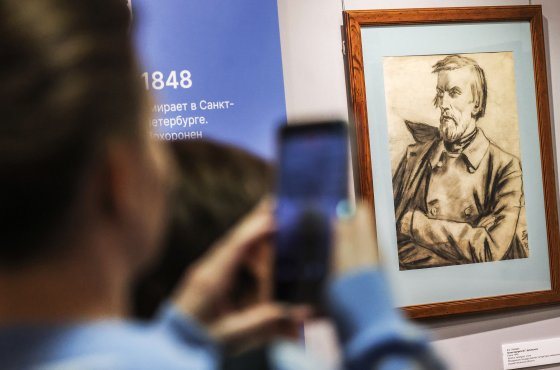
Music also played an important part in Tolstoy's fiction. An illustration for the story Albert depicts its hero, a violinist who is transformed as he plays. In The Kreutzer Sonata, by contrast, music becomes the cause of tragedy, inflaming the characters' passions. The novella made a powerful impression on society, but it was banned by the censors and never appeared as a separate edition, so people copied it out by hand. The exhibition shows one such hectographed copy, meaning it was reproduced on a special duplicating machine.
One section is devoted to music-making at home in the writer's family. It includes a pencil drawing from Tatyana Lvovna's album showing Lev Nikolayevich and Sofya Andreyevna playing piano duets. Another drawing depicts Alexandra Lvovna and Mikhail Sukhotin with guitars. Tolstoy not only played music but also composed it, and visitors can listen to a waltz he wrote. During his military service he also wrote lyrics for soldiers' songs. Visitors can try performing one of them, "The Sevastopol Song," as written down by his son Sergei Lvovich.
The exhibition has also prompted a concert series, which the museum has launched before its building on Prechistenka closes for restoration on January 31. Together with the Anton Rubinstein Heritage Center, the museum is holding a cycle of reconstructed concerts in which musicians perform the programs of the very Rubinstein brothers' concerts that Tolstoy attended. Upcoming evenings will feature the Rubinstein Trio, Yekaterina Richter and the OpensoundQuartet ensemble. The series will close with the pianist Alexander Klyuchko, a laureate of the International Rachmaninoff Competition.


Letters