
The fossil of a child who lived some three million years ago is calling into question long-held ideas about human origins. An international team of scientists suggests that our family tree was far more branched than previously thought.
Found in South Africa in 1924 and dubbed the "Taung Child," the fossil was the first compelling evidence that Africa was the cradle of humankind. It became the type specimen for the species Australopithecus africanus. But a new study published in the journal Nature shows that many other fossils may have been assigned to this species by mistake.
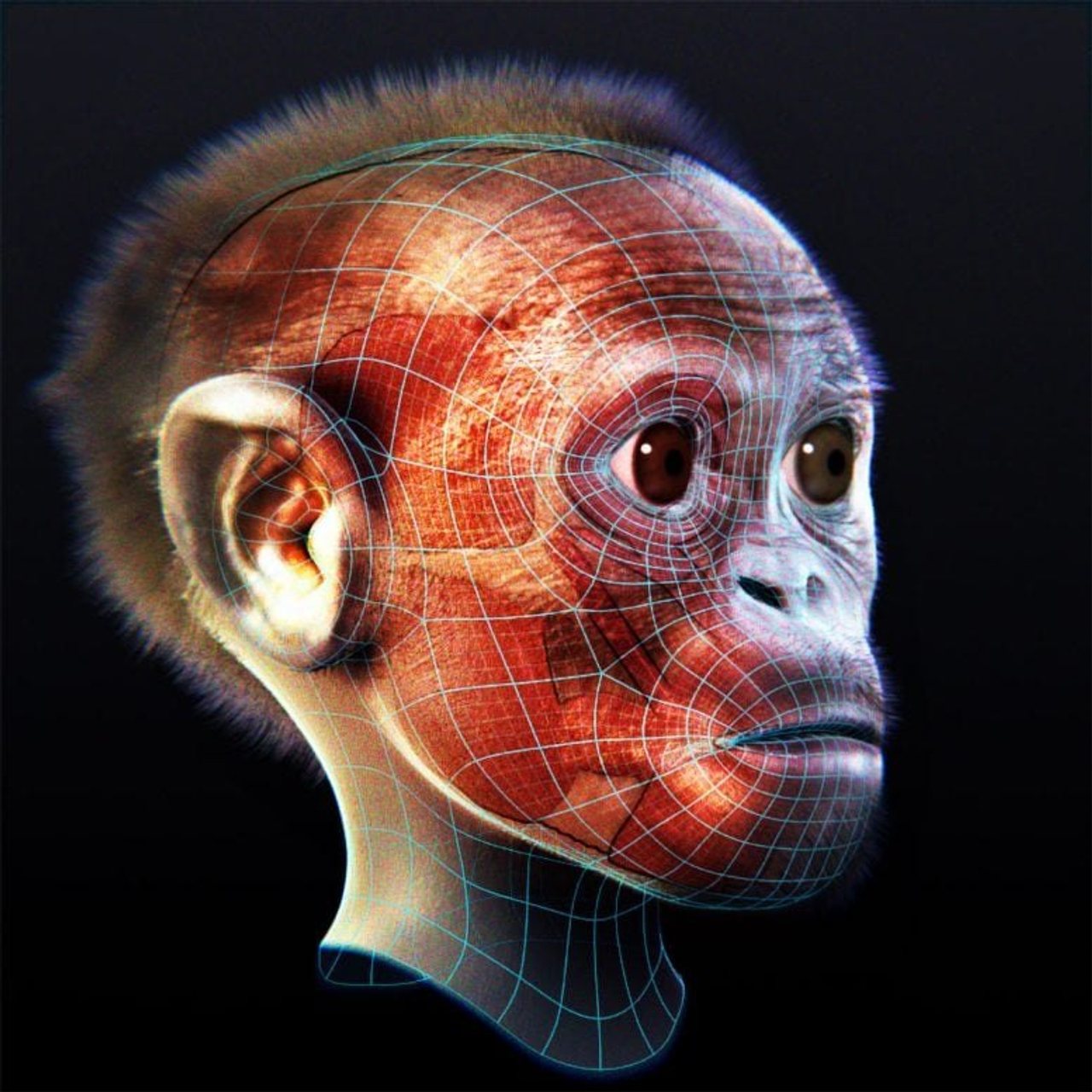
The researchers refined the age of the Taung Child to between 2.96 million and 3.03 million years. They now believe that some other finds traditionally attributed to its species may in fact belong to different branches of early human evolution.
Brain development points to several species
A research team led by Professor Gabriele Macho of the Free University of Brussels examined tooth structure, as well as patterns of brain and dental development, in early hominins, the group that includes modern humans and their extinct ancestors.
They found that the developmental trajectory of several adult individuals previously classified as Australopithecus africanus does not match the way the Taung Child developed. The differences are especially pronounced in the structure of the brain. This led the scientists to conclude that several hominin species may have lived in South Africa's Sterkfontein region, either at the same time or at different times.
For more than a hundred years, we assumed that the Taung Child was just one of many similar fossils from that era. Our findings overturn that idea. The human family tree was not a tidy, straight trunk but a chaotic, tangled bush shaped by changes in climate.
— Gabriele Macho, lead author of the study
Climate change divided early human populations
The diversity of species can be explained by the environment in which these ancient human relatives lived. Analysis of fossil pollen showed that the Taung Child inhabited a wetter, more wooded landscape than present-day South Africa. Some of the trees that grew there at the time are now found hundreds of kilometers to the northeast.
Over millions of years, alternating wet and dry periods repeatedly transformed the region. As forests and other habitats expanded or contracted, hominin populations could become isolated, evolve separately and then come back into contact. The researchers suggest that these shifting conditions encouraged interbreeding and the development of adaptations to different predators and diseases.
Southern Africa's position between the tropical and temperate climate zones made it a likely meeting ground for populations that had followed different evolutionary paths. The new findings suggest that the emergence of our genus, Homo, was not a linear process but the result of complex interactions among ancient populations that, as the climate changed, split apart and reunited again and again.


Letters