
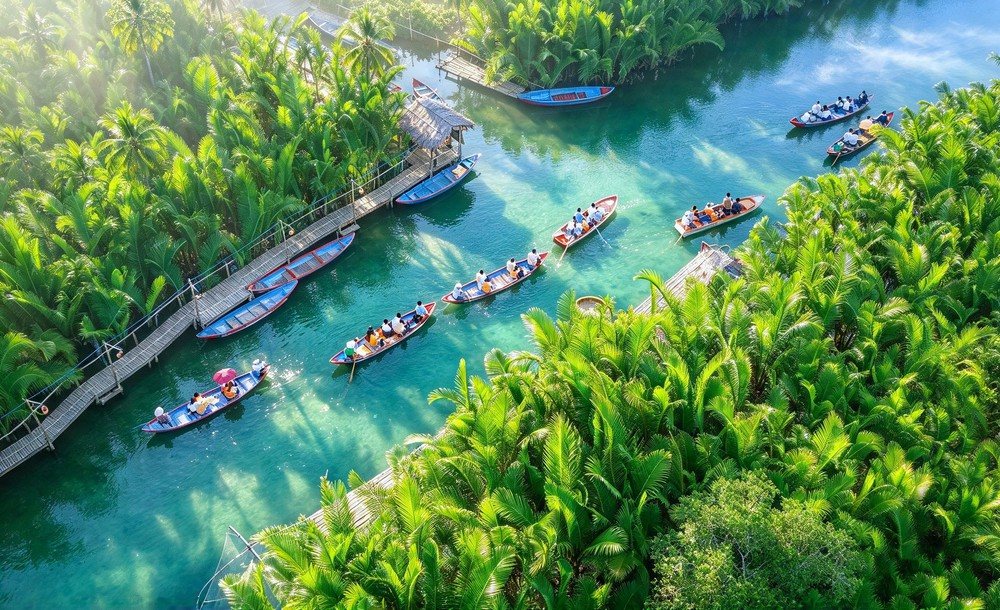
From the Cua Dai estuary, where the Tra Khuc River flows into the sea, a small branch about five kilometers long extends to the northeast—the Kinh Giang River. It flows past Thien Ma Mountain and a temple honoring the great mandarin Truong Dang Que before meeting the sea again. Along its banks stretches a nipa palm forest that holds the history of this area.
The Golden Age
Like many coastal areas of central Vietnam, the riverbanks of Quang Ngai province were once centers of bustling trade. According to researcher Cao Chu, former deputy director of the local Department of Culture, Sports and Tourism, the Kinh Giang River served as a waterway for traders in small boats.
During his field trips, he heard from village elders that hundreds of years ago, merchants in “ghe bau” boats would sail from the south along the Phu Tho River, through the Cua Dai estuary, and then up the Kinh Giang River to reach the villages of Tinh Ky and Binh Chau. They brought shrimp, fish, ceramics, and fabrics to sell.
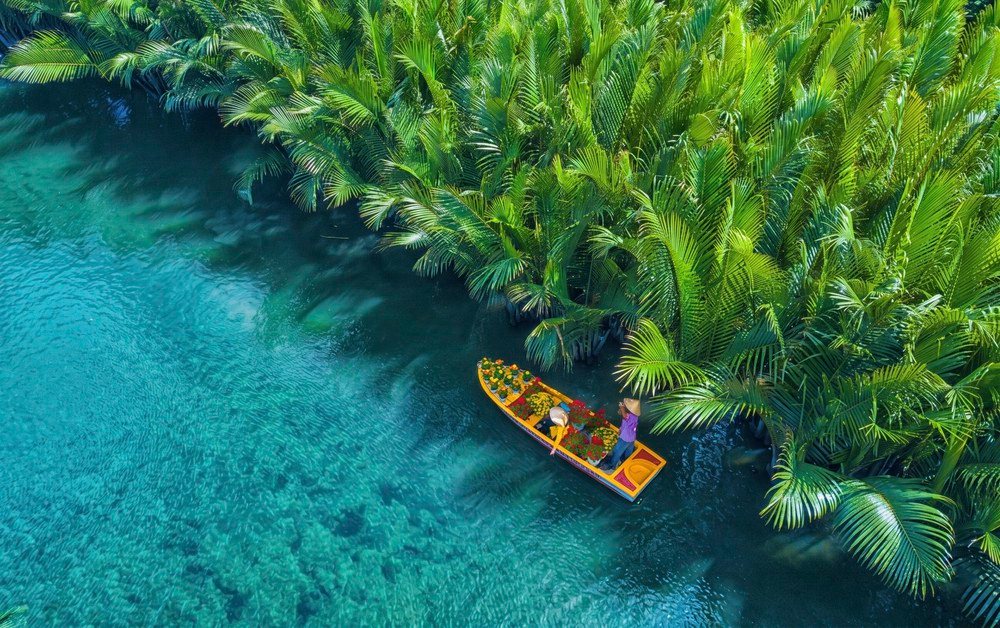
On their journeys, they also brought nipa palm seedlings, which they planted along the river. Over time, these plantings grew into a vast forest. The brackish water of the Kinh Giang was rich in fish, shrimp, and shellfish, which fed the residents of the fishing villages. The smooth river silt made the banks a convenient place to moor and repair large fishing vessels.
The lands by the Kinh Giang River are also known for their scholarly traditions. A folk saying has been preserved that praises the Truong family of Thien Ma Mountain: “When Thien Ma Mountain crosses the river, then there will be no more princes in My Lai village.” The most famous native of this area was Truong Dang Que—a great mandarin of the Nguyen dynasty who served under emperors Minh Mang, Thieu Tri, and Tu Duc.
From Military Base to Tourist Center
The palm forest not only fed the local people but also served as a base for revolutionary forces in the two Resistance Wars. The dense thickets and swampy banks provided a secure refuge for guerrilla units. From here, fighters secretly transported people and supplies to the provincial administrative center.
Local residents Do Thi Tien, now 70, and Nguyen Thi Tia, a 69-year-old former guerrilla, recall the fierce battles of 1969–1975. The fighters took cover in the forest, spending much of their time in water-filled trenches. They survived on rice passed to them by peasants and on river fish. In 2007, the provincial authorities recognized the former base in the palm forest as a historical and cultural monument.
In the late 20th century, due to a spontaneous trend of farming tiger shrimp, many residents cut down the palms and encroached on the riverbed. When the shrimp ponds ceased to operate due to losses, the forest began to recover. Fishing and weaving with palm leaves were revived, giving people a new way to earn a living.
In 2023, the My Khe Agricultural and Tourism Cooperative was established. Its members organize tours for guests, revive handicrafts, and introduce local products. In July 2024, the provincial authorities officially recognized the Tinh Khe palm forest as a tourist site. And by March 2025, its tourism services had received three stars under the “One Commune, One Product” program, confirming the model’s potential.
According to cooperative director Nguyen Van Dung, the nipa palms now cover nearly 12 hectares. The cooperative includes more than 30 families. They offer guests boat trips through the channels, crab and net fishing, lessons in weaving with palm leaves, and treats made from local seafood. The people who once simply subsisted on the river have now become guides, telling visitors the history of their region.
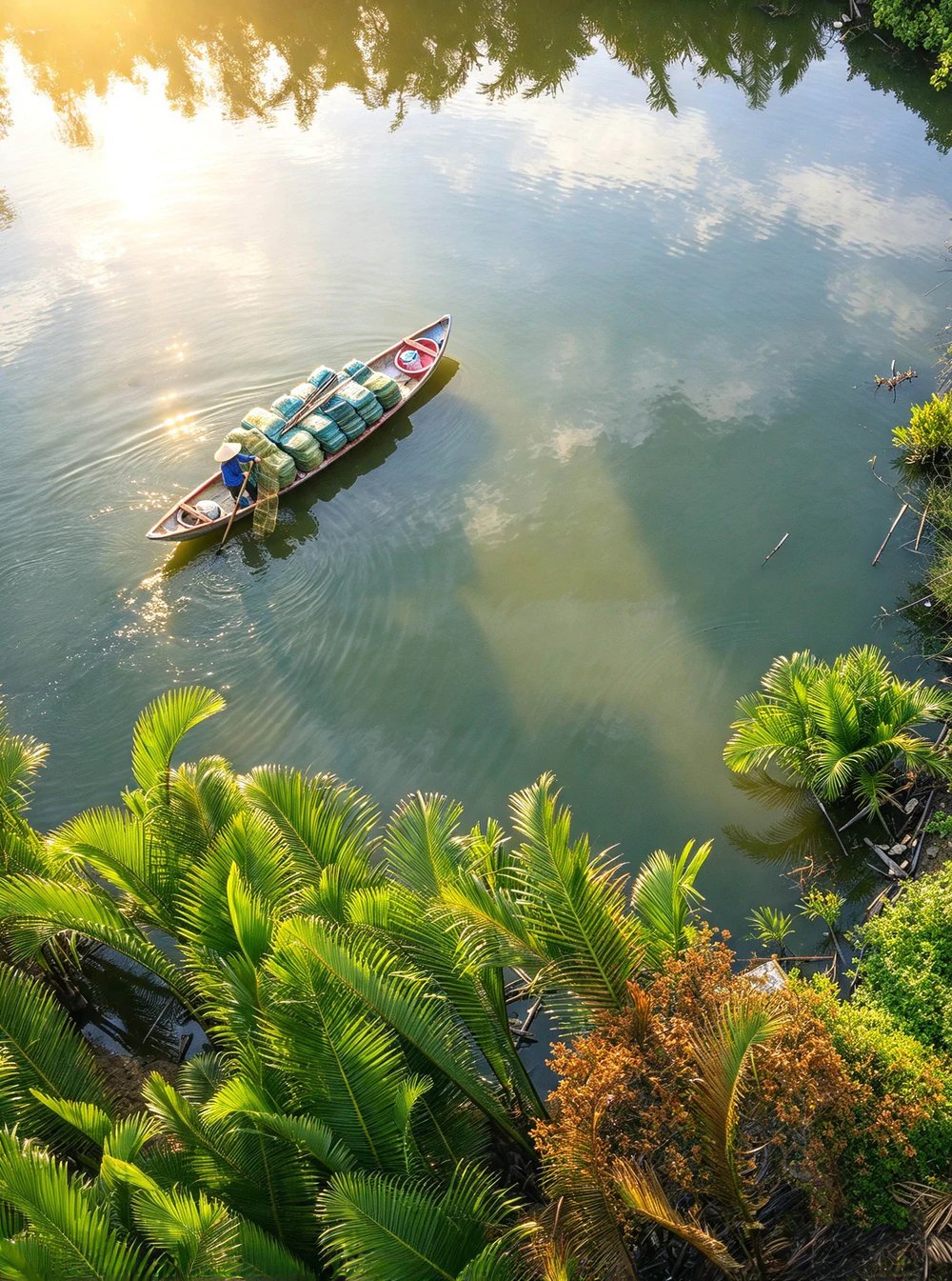
Local authorities plan to set up rest stops and food pavilions to develop the community tourism model. It is expected that the palm forest, My Khe Beach, the Son My memorial complex, and other attractions along the Tra Khuc River will be combined into a single tourist route.


Letters