
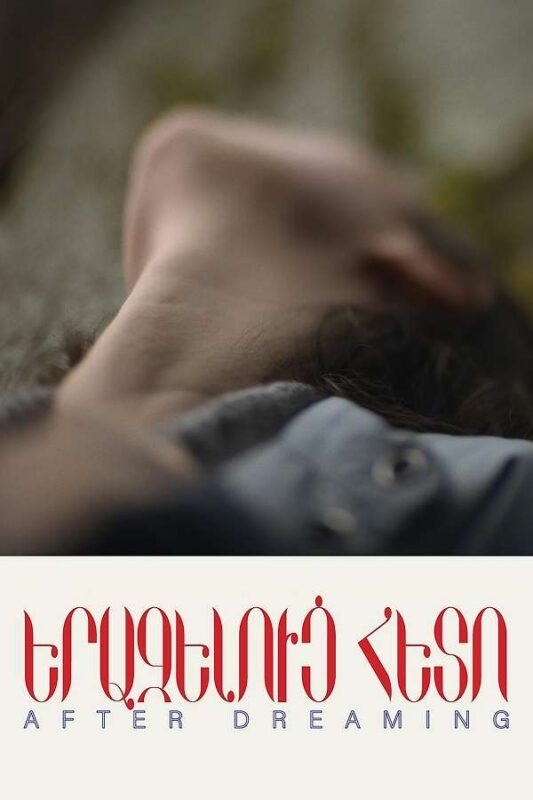
After the screening of Christine Haroutounian's After Dreaming, a palpable unease hung over the theater. The cause was not only the tragic events the film depicts but also, perhaps, the sense of detachment it leaves in the viewer.
The 2025 feature is distinguished by surreal landscapes, convincing performances and a striking visual aesthetic. Atom, a sullen, lanky soldier played by Davit Beybutyan, escorts a young woman named Claudette, played by Veronika Poghosyan, across war-ravaged Armenia. Gradually they become lovers, and then husband and wife. As Atom drives her through the rainy winter toward her family and the promise of safety, Claudette does not know that her father has been mistakenly shot dead at the border by a fellow Armenian. The unhurried camera, the muted sepia palette and the close attention paid to the faces of both professional and nonprofessional actors lend the film its emotional force. Through the relationship between Claudette and Atom, the director explores the effect of trauma on a person, while also taking up themes of family, religion and Armenian national identity. The film incorporates documentary footage of a mass wedding held in Stepanakert in 2008, when some 700 Armenian couples were married on a single day, footage that is all the more poignant in light of what came after.
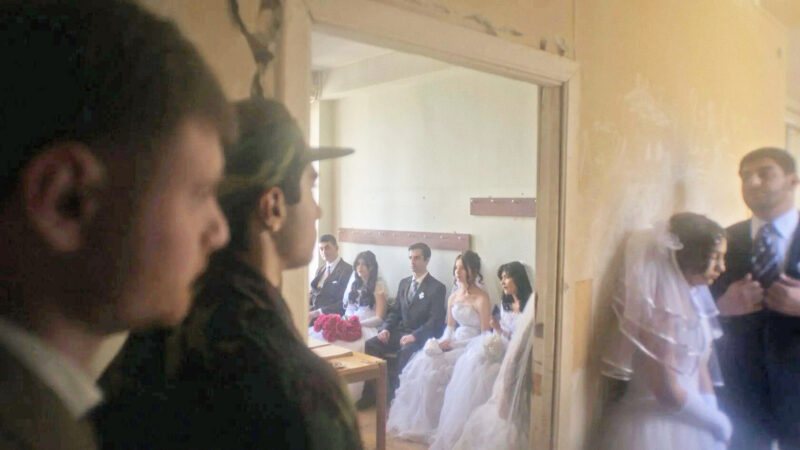
After the screening, director Christine Haroutounian said that although the film is firmly rooted in Armenia's recent history and the recent loss of Artsakh, its concerns reach beyond any single conflict to broader questions of war, intimacy and human relationships.
Even so, the film feels overlong; it might have been more powerful as a short. Like Armenia's history itself, it can seem relentlessly bleak, leaving little room for a shift in tone or a moment of release. The relationship between the two leads also raises questions the film never resolves. Poghosyan plays Claudette as timid and petulant, while Beybutyan gives Atom a virile, menacing air. Before they first sleep together, he remarks matter-of-factly, "God himself couldn't have helped the last woman I slept with." The line seems to foreshadow a disturbing scene that will reveal something essential about his character. Yet the sex scene itself turns out to be surprisingly restrained. Once again the audience is shown full female nudity but not male, a familiar cinematic asymmetry.
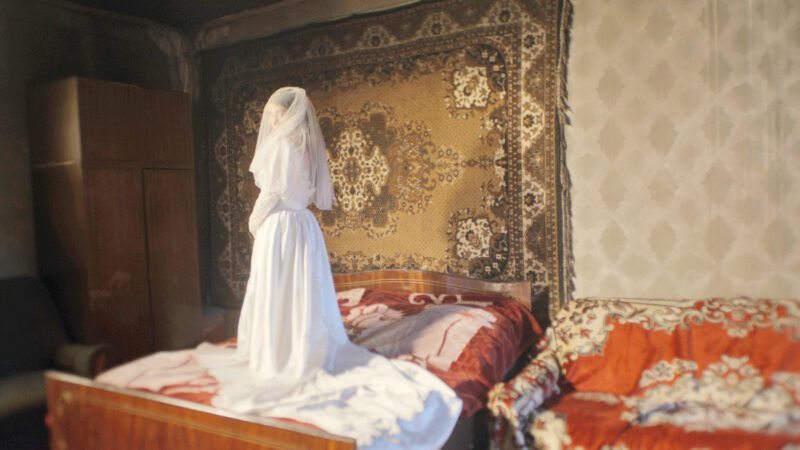
The dialogue between Atom and Claudette feels contrived, circling endlessly around whether they "understand each other." The effect is less one of meaningful ambiguity than of adolescent bickering. Some scenes test the viewer's patience, particularly the seemingly interminable car ride at the start and a long sequence with the musicians at the wedding. By contrast, the scene of the berd, a traditional Armenian round dance performed here by soldiers, is genuinely powerful. The final sequence, in which fireworks become indistinguishable from exploding shells, is an outstanding piece of directing. This devastating visual transformation conveys in an instant what other, more drawn-out passages of the film struggle to express.
Experimental cinema is not exempt from the demands of pacing, development and clarity of statement, even when that statement is deliberately elusive. After Dreaming contains images that linger long in the memory. Cinematographer Evgeny Rodin deserves high praise for the film's haunting visual power. If Christine Haroutounian develops a more rigorous sense of timing, she could become a very significant filmmaker.
After Dreaming, in Armenian with English subtitles, runs 105 minutes. It was screened in New York from October 23 to 25 as part of the program "Our Century: Spirals of Armenian Cinema."


Letters