
The full Tour du Mont Blanc, or TMB, covers about 170 kilometers around the Mont Blanc massif through France, Italy and Switzerland, with roughly 10,000 meters of elevation gain. An express version of the trek keeps the most scenic sections, the high passes and the balcony trails, while the valley stretches are covered by lift, bus and shuttle. That way you can complete the same circuit in six or seven days instead of the usual ten or eleven.
A hike like this takes careful planning. Lodging, buses and lifts along the route all run on seasonal schedules, and a compressed itinerary leaves little room to maneuver if something goes wrong. Here is how to fit all the pieces of the plan together.
Route first, transport second
Start your planning with the sections you are determined to walk. For most hikers, that means the Col de la Seigne, the Mont de la Saxe balcony trail above Courmayeur, the Grand Col Ferret and the trails above Chamonix. The low-lying gaps between them can be shortened with transport.
Even in the condensed version, the days will be long. Expect climbs of 900 to 1,300 meters, often followed by long descents, and five to seven hours on the trail. Rough ground, heat or a slow group pace can stretch that further. Test each stage with a simple question: could you still finish safely if the last hour took twice as long as you planned?
For those with very little time to reach the trailhead, or for groups converging from different cities, it may be more convenient to fly into Geneva by private jet and continue on a prearranged transfer. That removes the uncertainty from the international leg and preserves a time cushion for the mountains, where weather or a slow descent may actually call for it.
Getting from Geneva to Les Houches without a car
For most travelers from abroad, Geneva Airport is the easiest gateway to the start of the route. Chamonix is about 100 kilometers away, roughly an hour and fifteen minutes to an hour and a half by shuttle or private transfer. With trekking poles, a duffel bag and plans for an early start on the trail the next day, this is usually simpler than the train, which is slower and requires changes.
Most shuttles run to Chamonix, but many will also drop you in Les Houches, the traditional starting point for the counterclockwise circuit, if you ask when booking. A local bus and the Mont-Blanc Express train also connect Chamonix with Les Houches. Renting a car makes little sense: it will sit in a parking lot for the entire hike, and having to retrieve it complicates any shortened or one-way itinerary.
Lodging comes first
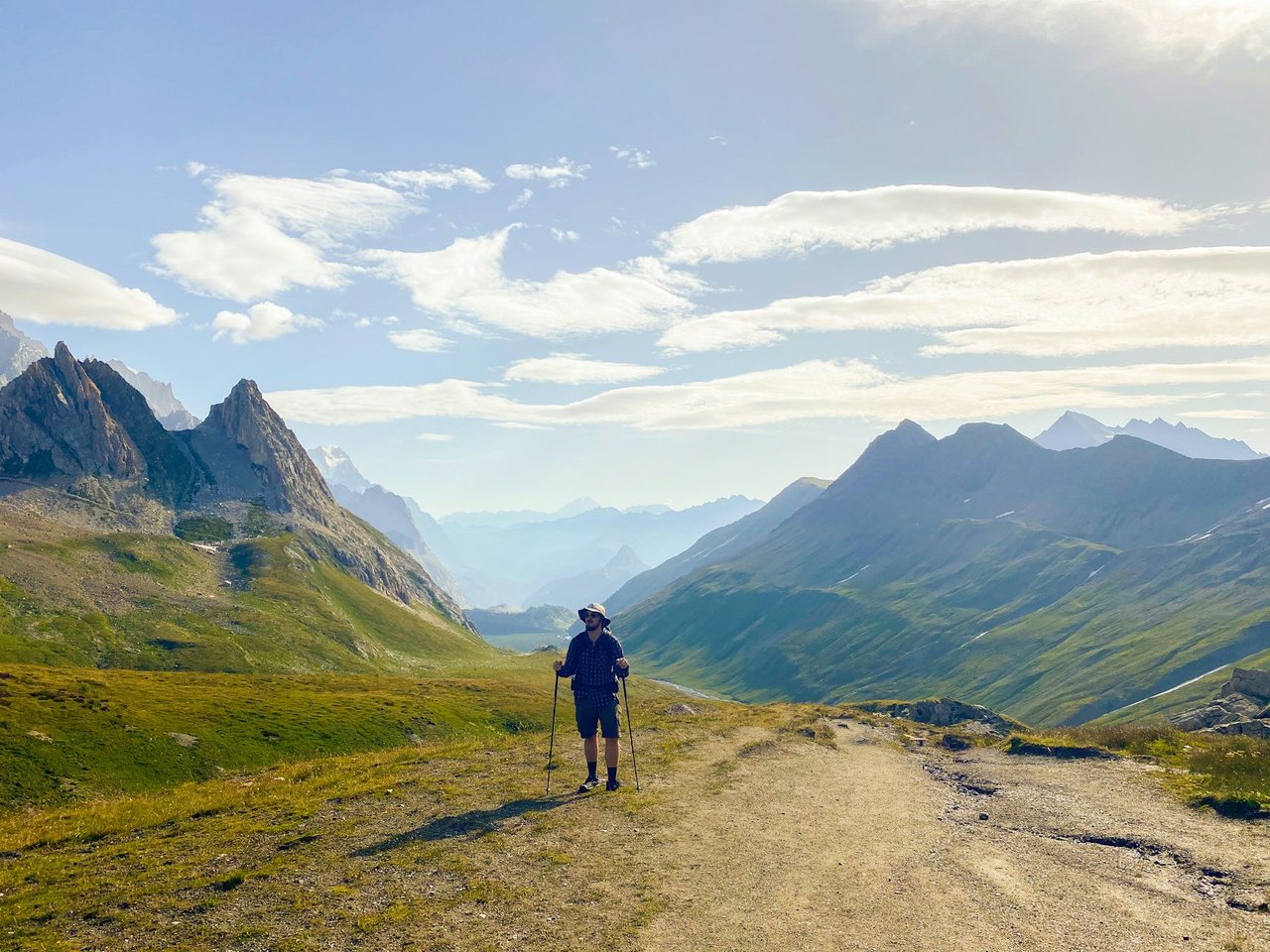
Lodging is the least flexible part of planning the TMB. A bus timetable may change, but a fully booked refuge or a hotel without room for your group can force you to rework two days of hiking.
So book your overnight stays first, then fit the transport around them. The official Mon Tour du Mont-Blanc platform opens reservations for its member refuges and guesthouses on October 15 for the following summer, and July and August fill up quickly. Refuges outside the association are booked directly. Check each one's operating season, too: some open in mid-June and close as early as mid-September.
Beds are usually hardest to find in Les Chapieux, Val Veny and the Swiss side of Val Ferret, where the nearest alternative may be a considerable distance from the trail. If Les Chapieux is full, a seasonal bus runs down to the town of Bourg-Saint-Maurice in the evening and back up in the morning. With every booking, ask whether dinner is included, how late you can check in and whether the property accepts luggage deliveries.
Using transport without missing the best parts
The best shortcuts skip the asphalt and the valley-floor transfers, not the major passes. These are the options worth knowing:
The Bellevue cable car in Les Houches. It lifts you about 800 meters to the Bellevue plateau (1,800 m), bypassing the first long climb. In 2026, the Les Houches lifts ran from early June to mid-September.
The shuttle from Les Chapieux. From mid-June to mid-September, it runs to La Ville des Glaciers and Les Mottes, cutting about 5 kilometers of road walking before the climb to the Col de la Seigne. A round trip costs 5 euros.
Buses in Courmayeur. In summer, local routes link the town with Val Veny and Val Ferret. That lets you end a stage in Courmayeur and reach the start of the next one without backtracking along the same road.
From La Fouly to Champex. Swiss TMR buses connect Ferret and La Fouly with Champex-Lac via Orsières. The tourist offices in La Fouly and Champex sell a combined ticket for TMB hikers.
From Martigny to Trient and the Col de la Forclaz. A regional bus links Martigny with Trient and the Forclaz pass, while the Mont-Blanc Express train runs from Martigny back into the Chamonix valley.
Check timetables for your specific dates. June and September often have fewer departures than July and August, and some routes run only at the height of the season. In Switzerland, transport follows the valleys, so a bus ride between two villages that look close on the map may require dropping down to Orsières or Martigny and changing.
Crossing both borders
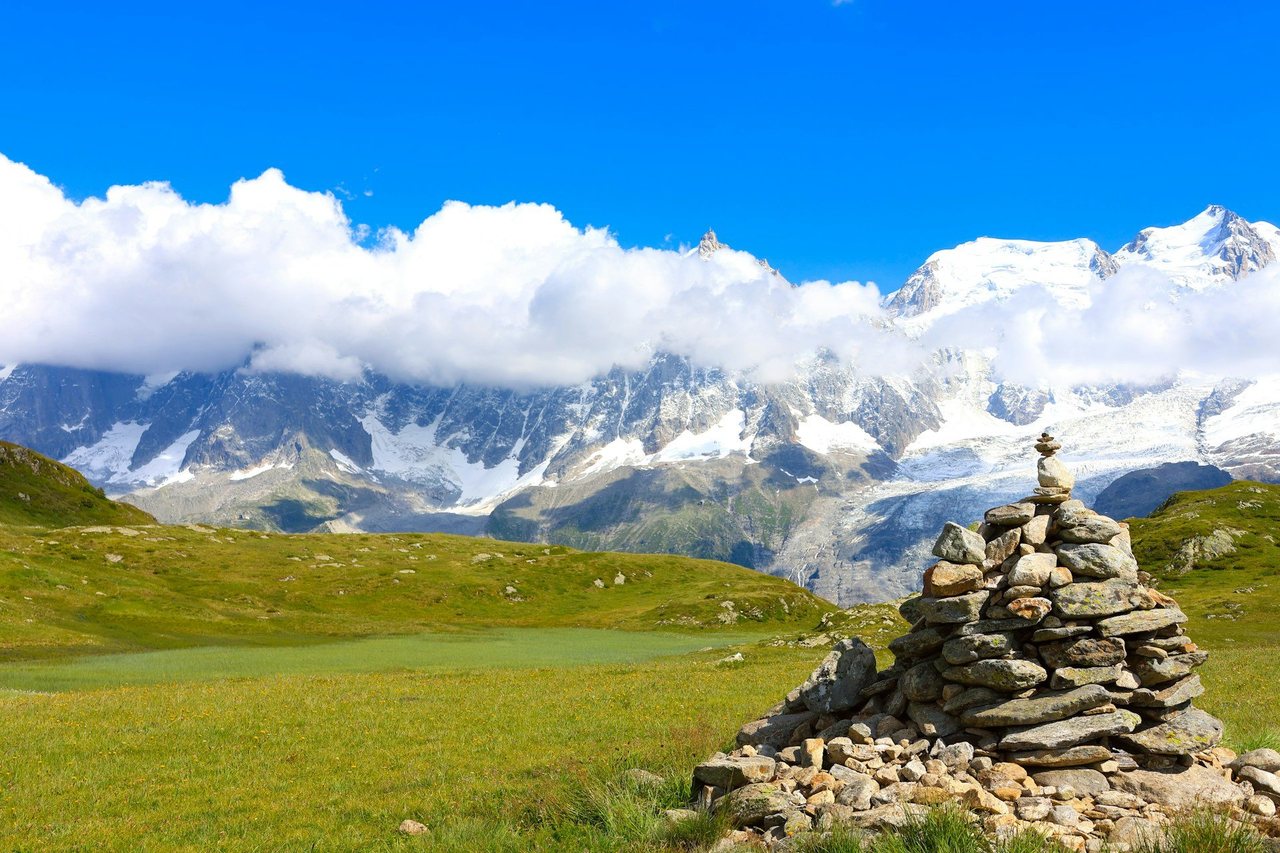
However tight your schedule, keep the two passes that make this an international trek. The Col de la Seigne (2,516 m) leads from France into Italy. The Grand Col Ferret (2,537 m) leads from Italy into Switzerland. Neither is a convenient transport hub, which is exactly why they are worth walking. Along the trail, the language on the signposts changes, the coffee changes, and the villages on the far side of the pass look and feel different.
There are no border checks on the trail, but you should carry a passport or ID card on every stage. Switzerland uses Swiss francs, and small establishments on the Swiss side of Val Ferret do not always accept cards.
Courmayeur as a reset point
After several hard stages, Courmayeur is the most convenient place to adjust your plans. It has far more lodging and services than the small settlements around it, and buses run into both side valleys. If weather closes a high route or someone's knees start to hurt, you can rework a stage here without abandoning the trek altogether.
Buses through the Mont Blanc Tunnel can get you back to Chamonix in under an hour. Treat this as a fallback. Use it as a planned shortcut and you will miss the entire Swiss section of the trek, Grand Col Ferret included.
A sample six- to seven-day itinerary
This counterclockwise plan keeps all the main passes and uses transport only for the valley sections. Adjust it according to where you manage to book lodging.
Day 1: Bellevue lift from Les Houches, then over the Col de Tricot or the Col de Voza to Les Contamines.
Day 2: From Les Contamines over the Col du Bonhomme and the Col de la Croix du Bonhomme to Les Chapieux.
Day 3: Shuttle to La Ville des Glaciers, then over the Col de la Seigne into Italy and down Val Veny, then by bus to Courmayeur.
Day 4: From Courmayeur up to the Bertone refuge and along the Mont de la Saxe balcony trail to the Bonatti refuge.
Day 5: From the Bonatti refuge over the Grand Col Ferret into Switzerland and down to La Fouly, then by bus to Champex.
Day 6: From Champex to Trient via the Bovine route or, in good weather, over the Fenêtre d'Arpette.
Day 7: From Trient over the Col de Balme back into France and down into the Chamonix valley.
Fit hikers sometimes combine days six and seven by taking the bus from Champex toward Martigny and Trient. That brings the trek down to six days.
Sending your main bag ahead
When the days are long and recovery time is short, luggage transfer matters a great deal. A heavy pack slows you down on steep climbs and adds strain to knees and ankles on long descents.
Carry a small daypack with rain gear, a warm layer, water, lunch and a basic first-aid kit, and send the rest ahead to your next hotel wherever possible. Confirm the details before you travel. Not every refuge accepts luggage deliveries, and transfer services often have limits on weight and drop-off times. A bag waiting in the wrong place is no help at 8 p.m. after a 1,200-meter descent.
Build in a buffer
A few simple rules will keep an express plan from unraveling. Don't schedule the hardest stage for the day you fly into Geneva. Leave one spare day, or at least one short day, in case of a storm or a missed bus. Finish the trek in the Chamonix valley, spend the night there and head to the airport the next morning. You won't walk every step of the classic route, but you will still cross three countries on foot and spend your limited time on its finest stretches.
Frequently asked questions
How many days does an express Tour du Mont Blanc take? Six to seven days is enough for fit hikers who use lifts and buses on the valley sections. The full walking route usually takes ten to eleven days. Anything under six days means skipping major passes or walking very long days.
When is the best time to go? From late June to mid-September, when refuges, lifts and seasonal buses are running. July and August offer the most reliable transport, but also the busiest trails, and lodging is hardest to find. In late June there may still be snow on the high passes; September brings quieter trails but fewer departures.
Do I need to book refuges in advance? Yes, especially for July and August. The official platform opens bookings for the following summer on October 15, and popular places can be fully booked within weeks. An express trek leaves less room for improvisation, so it is best to confirm every night's stay before buying flights and transfers.
Do I need a passport? You won't encounter border controls on the trail, but you should carry a passport or ID card on every stage. Switzerland is part of the Schengen Area but not the EU, and police may check documents at any time.
Which direction should I walk? Most hikers go counterclockwise from Les Houches, the classic direction followed by most guidebooks and signposts. Walking clockwise can mean emptier trails at times, but you will constantly be meeting the main flow of hikers coming the other way.
Can I do an express TMB without a guide? Yes. The route is well marked and requires no technical mountaineering skills in summer. Even so, guides or tour operators can be useful, since they handle lodging reservations, transfers and luggage transport, which is to say most of the logistics.


Letters