
For centuries, a small, dark scrap of fabric found in the grave of a young woman on the steppes of Central Asia kept its secret. Darkened and brittle, it was barely distinguishable from the surrounding soil. But under the microscope it emerged that the fabric had traveled an enormous distance before it was buried, several centuries before the trade routes later known as the Silk Road began to take shape.
A Find in a Steppe Grave
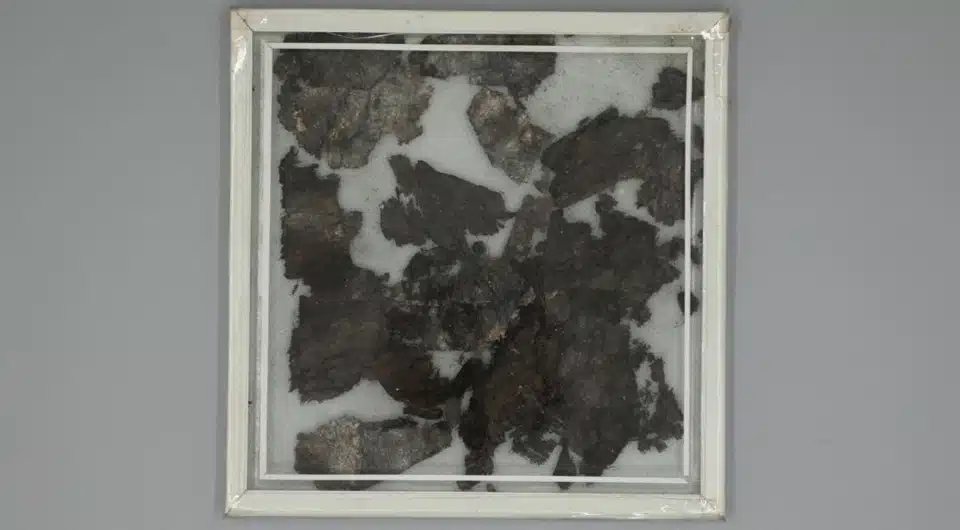
The fragment was discovered at the Karatuma burial ground in the Almaty region of southeastern Kazakhstan. The grave dates to between the fifth and third centuries B.C. It held the remains of a woman who is believed to have died between the ages of 18 and 25.
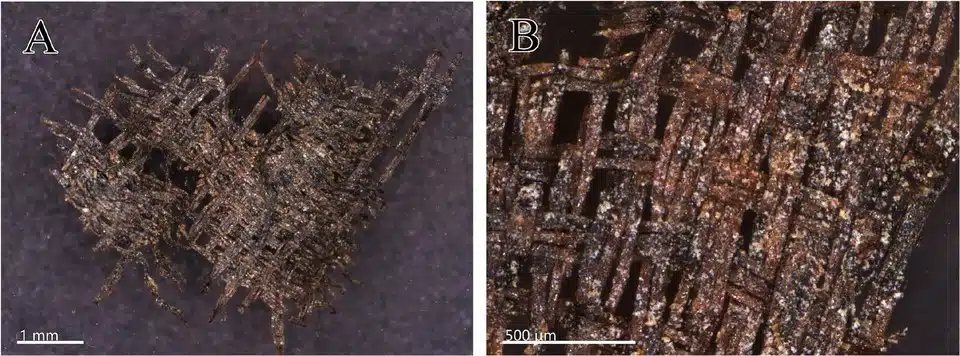
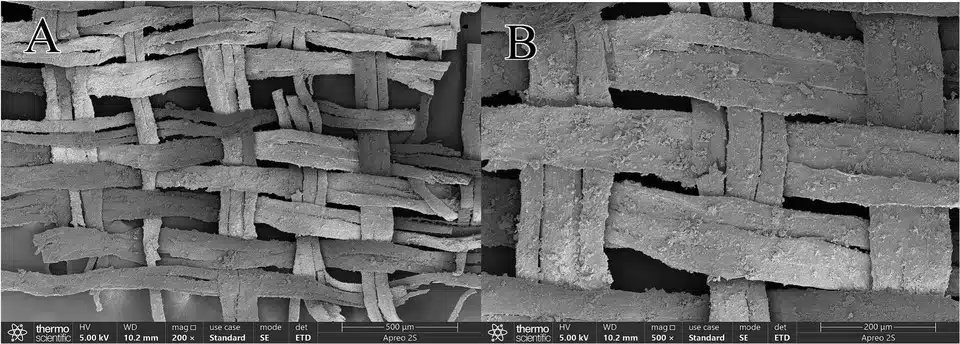
The scrap itself is tiny, just 8 by 5 centimeters. It lay roughly in the center of the grave, 30 to 40 centimeters from the bones of the woman's arm and leg. Judging by its position, researchers believe the fabric was part of her burial garments. Over the centuries underground it had decayed badly: the fibers had mineralized, and the surviving threads were coated in a dark deposit. Even so, Kazakh conservators were able to make out a simple plain weave in which fine warp threads crossed thicker weft threads. The weaving technique suggested that it might be silk, but until recently the hypothesis had no laboratory confirmation.
What the Microscope Revealed
The study was made possible by a collaboration between the Shaanxi Academy of Archaeology in China and Kazakhstan's Issyk Historical and Cultural Museum-Reserve. In 2024, specialists from Shaanxi began examining textiles in the collections of Kazakh museums, and by 2025 they had embarked on a full scientific analysis of the Karatuma fragment.
A team of researchers led by Zhenzhen Ma examined the fabric using optical and scanning electron microscopes, infrared spectroscopy to determine its chemical composition, and proteomic analysis, a search for surviving traces of protein in the ancient threads. The results, published in the scientific journal Journal of Archaeological Science: Reports, confirmed that the fabric was made of tussah silk. It is produced by the wild silkworm Antheraea pernyi, which lives in China and feeds on the leaves of oak and other broadleaf trees, unlike the domesticated silkworm raised on mulberry trees. Exactly where in China the material was woven, and by what route it reached Kazakhstan, remains unknown.
Before the Silk Road Had a Name
The history of the Silk Road is generally said to have begun in the second century B.C., when China's Han dynasty sent its envoy Zhang Qian to the west. His journeys to Central Asia helped establish diplomatic ties and fostered the growth of trade networks. By then, however, the Karatuma fabric had already lain in the ground for several generations.
Its presence in Kazakhstan indicates that Chinese goods were moving across the Eurasian steppes long before the official contacts of the Han era. Researchers link the find to the so-called "Steppe Silk Road," a network of contacts that stretched across the steppes long before the better-known routes appeared. Archaeologists have been gathering evidence of these early connections for many years. A single scrap of silk does not prove that regular direct trade existed between China and what is now Kazakhstan. The fabric may also have been a gift, or may have passed through several owners before reaching its last.
A "Sister" in the Altai Mountains
Farther east, in the Altai Mountains, archaeologists found another, strikingly similar fabric. It belonged to the so-called Ukok Princess, a woman of the Pazyryk culture buried in the fourth or third century B.C. Her burial attire consisted of a silk shirt and a woolen skirt. Earlier studies showed that the shirt was made of wild silk, but its origin, whether China or India, had been a matter of debate.
Kazakh specialists had previously noted similarities between the Karatuma fragment and the clothing from the Ukok Plateau, particularly in the structure of the yarn and the weaving methods. Now that the Karatuma silk has been identified as Chinese tussah, the comparison rests on firmer scientific ground. Two silk items from roughly the same period, found in different parts of the Eurasian steppe, suggest that wild silk may have been more widespread in the region than a single burial would indicate.
Mended, Then Buried
Perhaps the most personal detail of this story has nothing to do with trade routes. The fabric had been mended. Conservators found two different kinds of stitches and clear signs of repair. Someone had taken the trouble to mend the garment before it went into the grave.
That suggests it was worn in life. The silk garment was not simply thrown away when it was damaged; it was valued. The mending offers no precise picture of the young woman's social standing, but it says something else: this was not merely an object made for a funeral. It was used, and it was cared for.


Letters