
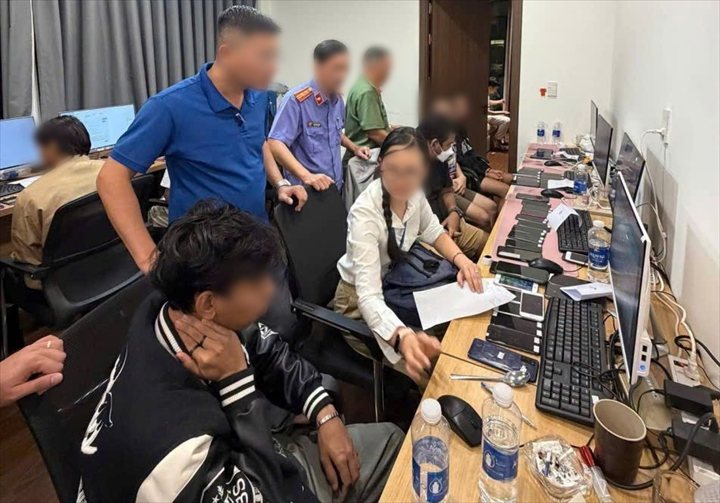
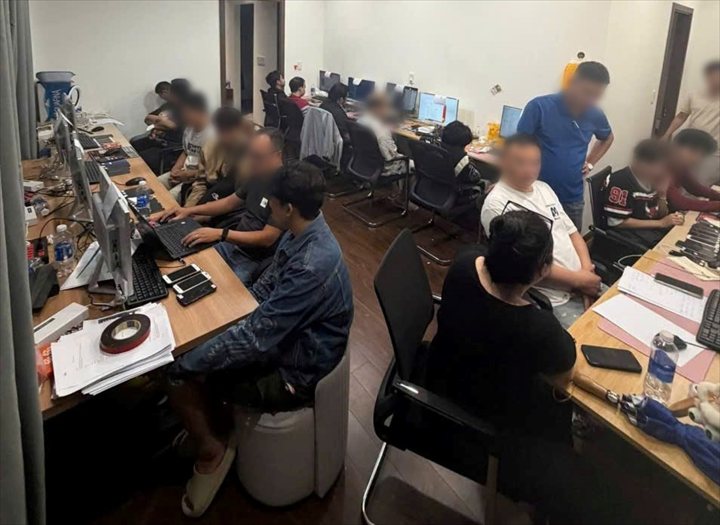
In late October, Da Nang police searched a villa in the Regal Victoria residential area. Inside, investigators found a fully equipped office: 12 desktop computers and 87 smartphones. Several groups of foreigners lived and worked at the villa full-time, and the organizers forbade them from leaving the premises.
Da Nang police announced on November 4 that they had broken up an international fraud ring. Thirteen foreigners were detained in the case: 11 Indonesian nationals and two Chinese nationals. Investigators believe the group was run by Xiong Zhouhua, a Chinese national born in 1993. He arrived in Vietnam in late August, invested about $60,000 in renting the villa and buying equipment, and then hired staff from Indonesia.
How the "scam factory" worked
The scheme was built on romance scams, and according to police, the ringleader bought the scripts for them on Telegram. Staff created fake female profiles on WhatsApp and Telegram and struck up conversations with users in Indonesia. Once trust had been established, the "sweetheart" would persuade the victim to sign up for a special money-making website that offered tasks simulating payment for online orders.
To build trust, the scammers would first let victims withdraw small sums with interest. Convinced that the scheme worked, a person would then invest more. As soon as a large sum landed in the account, the fraudsters would demand further deposits on various pretexts and block any withdrawals.
Money from victims went into bank accounts in Indonesia. According to police, two private Telegram groups were used to manage the flow of funds: one handled payments from victims, the other the small refunds meant to build trust. At the end of each day, the proceeds were automatically converted into the cryptocurrency USDT and, after a 3 percent transaction fee was deducted, transferred to the organizer's digital wallet.
In a gilded cage: conditions for the "staff"
For the 11 Indonesians hired to work at the villa, the job turned into captivity. When they arrived in Vietnam, the ringleader confiscated their passports. Workers were paid $700 a month and promised a $200 attendance bonus. At the same time, a system of fines was in place: for missing their targets, workers could be docked anywhere from $400 to $1,000, meaning a fine could exceed a month's pay. Teams that brought in $10,000 received bonuses of 5 to 13 percent of that sum.
How to spot a "love-investment" scam
Schemes that combine romance with bogus investments share common features. Red flags include quick declarations of strong feelings from someone you have never met, especially if the conversation soon turns to making money. Another telltale sign is a constant refusal, on one pretext or another, to meet in person or talk by video call.
Victims are often invited to sign up for an attractive-looking but fake investment platform. To lull them into a false sense of security, scammers may let them withdraw a small initial profit. But when the person tries to take out a large sum, they are told to pay fictitious taxes, fees, or insurance. Another warning sign is an insistent request to keep the "joint project" and the relationship secret, since secrecy keeps the victim from seeking advice from loved ones.
What to do if you have been scammed
Da Nang police urge the public to be wary of online offers that require money up front. If you are asked to pay an extra fee to withdraw your own money, report it to the police immediately. If the money has already been transferred, contact both the police and your bank at the same time to try to stop the transaction. If scammers have gained access to your bank card details, the card should be blocked at once.
The bust in Da Nang is one example of the Vietnamese authorities' fight against cybercrime. In late October, police in Thanh Hoa province dismantled another fraud network involving 113 foreigners. Commenting on the Da Nang case, Major General Nguyen Quoc Toan said that Vietnam protects the rights of foreign visitors but will not allow its territory to be used for transnational crime.


Letters