
An international team of cavers has reported the discovery of an unusual waterfall in Vietnam. It lies in Cha Ngeo Cave, in Phong Nha-Ke Bang National Park in Quang Tri province. A river at the surface tumbles into a nearly vertical karst shaft, or sinkhole, and falls some 350 meters.
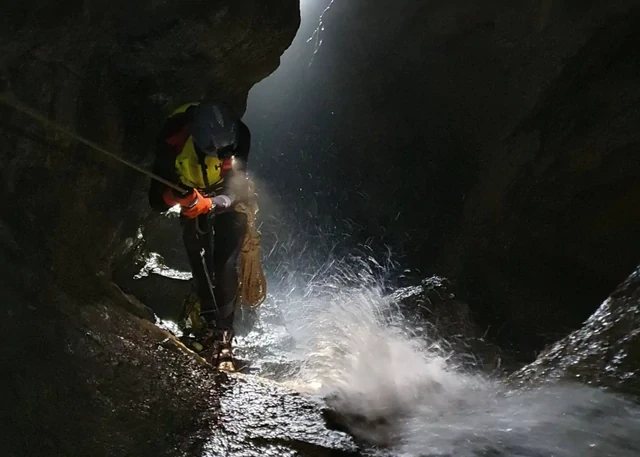
Even for seasoned explorers, the descent proved extremely difficult. The cave's entrance is a deep shaft into which a stream of water pours. To make their way down, the expedition had to use climbing gear, drill into the walls and install safety anchors.
A perilous expedition
According to the newspaper Nhan Dan, the exploration took place in early 2026. The joint British-Vietnamese team included ten foreign and three Vietnamese specialists, along with guides and porters. The trek to the cave through jungle, across streams and up slippery slopes took a day and a half. The team slept in hammocks strung between trees, because the uneven limestone ground made it impossible to pitch a camp.
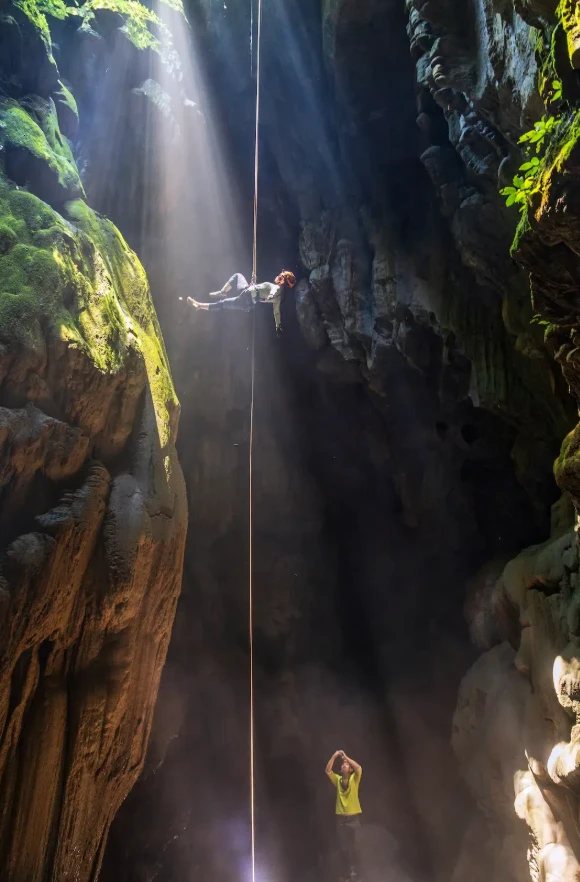
The first stage of the descent is a sheer 90-meter wall. Below it come sloping sections and ledges that forced the team to keep changing tactics. Howard Limbert, the team's leader, told the newspaper Nguoi Lao Dong that the cave has difficult terrain and high humidity, and carries the risk of rockfalls and sudden rises in the water.
This was not the first attempt to descend into Cha Ngeo. In 2023, having learned of the cave from local residents, the team had already tried to explore it. That expedition ended badly: a rock fell on one of the members, breaking his arm. The others managed to descend about 300 meters but were forced to turn back when they ran out of rope, with the bottom still nowhere in sight.
Three years later, the team returned better prepared. This time, according to Nhan Dan, they brought several thousand meters of rope and specialized equipment. Even so, despite all that preparation, only two specialists made it to the very bottom of the shaft.
What lay in the depths
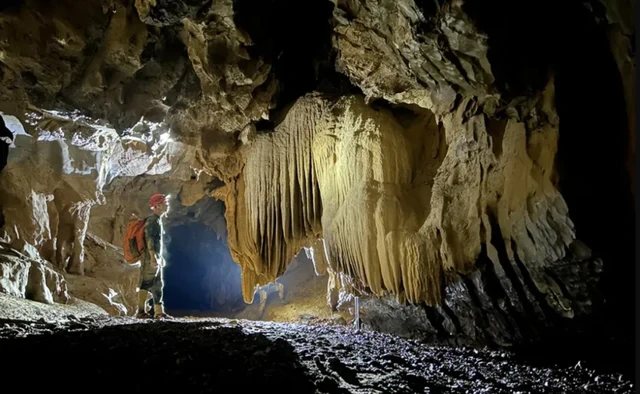
Cha Ngeo Cave, the newspaper Tuoi Tre reports, has a rare structure in the form of a vertical shaft. Its entrance lies 751 meters above sea level. Water from a forest stream falls straight into the shaft, forming a waterfall about 350 meters high, and flows into a system of underground rivers.
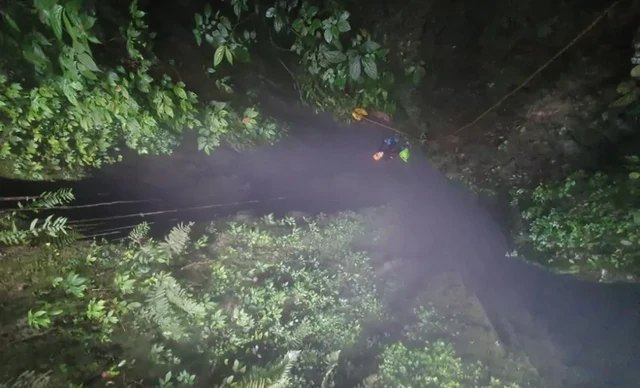
At the bottom of the shaft, the researchers found a horizontal cave passage. The water continues onward through underground channels, and in places the explorers had to swim to keep going. The surveyed section of the cave measured 583 meters in total.
Howard Limbert, who has been studying Vietnam's caves for almost 36 years, considers Cha Ngeo one of the most challenging to explore. It is bitterly cold inside, the terrain is dangerous and the descent demands a high level of technical skill. The two cavers who reached the bottom could not stay there long, because they had no specialized thermal clothing with them.
The researchers believe the cave is only part of a larger underground system and plan to return in March 2027 to continue their work. The discovery of Cha Ngeo was part of a larger expedition that ran from March 21 to April 11, 2026. During that time, the team surveyed 29 caves, 26 of them new, with a combined length of more than 13.6 kilometers.
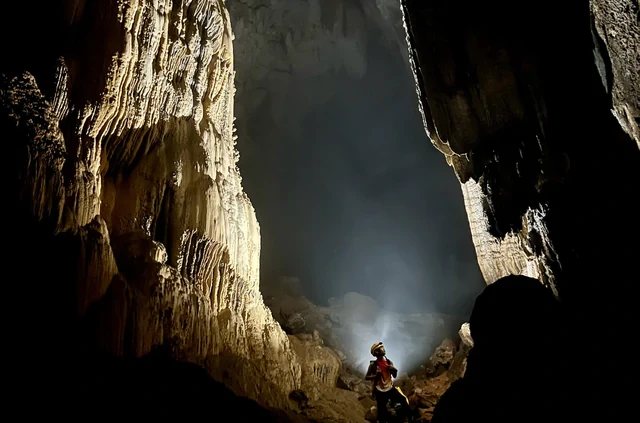
Spectacular as it is, Cha Ngeo Cave is not suitable for ordinary tourists. Specialists warn that descending a shaft hundreds of meters deep requires excellent physical fitness, rope skills and experience on caving expeditions. Because of the risk of rockfalls and strong currents, visiting on one's own is extremely dangerous. Travelers to Phong Nha-Ke Bang are advised to choose developed routes, such as Phong Nha and Thien Duong caves, or to book tours with professional guides.


Letters