Eighteen Months of British Batumi
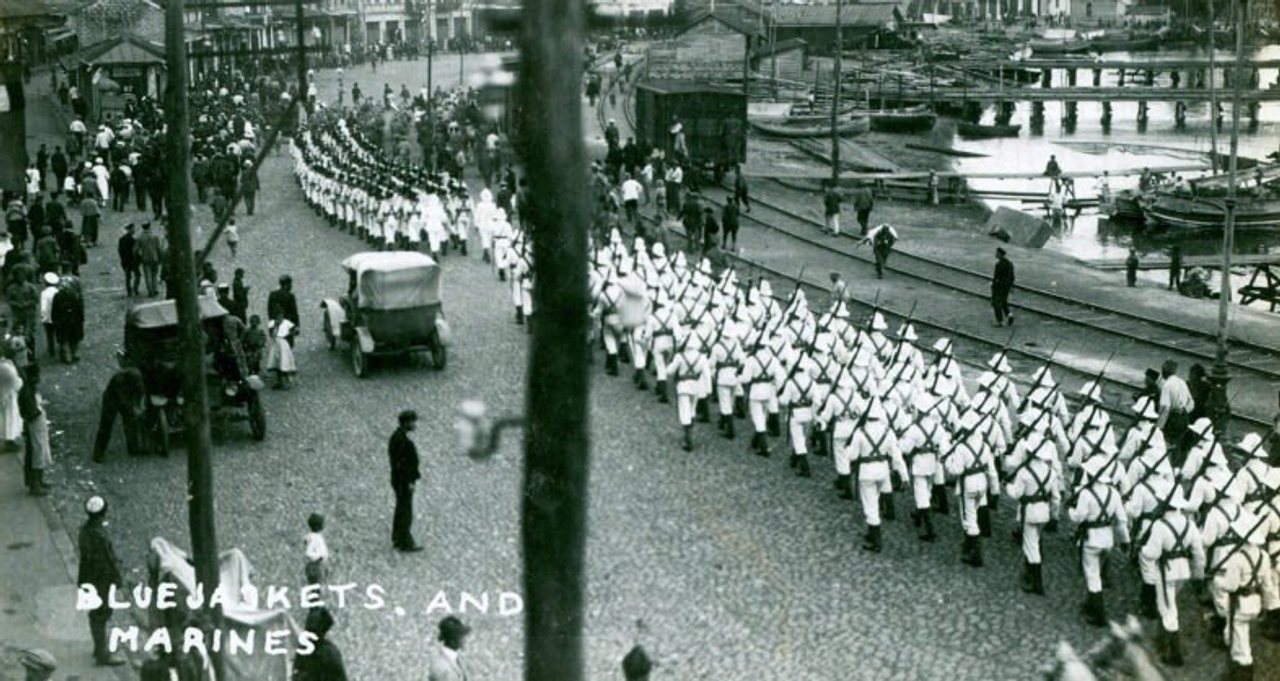
Under the Treaty of Brest-Litovsk of March 1918, Batumi had gone to the Ottoman Empire. In late autumn 1918 the British cruisers Liverpool and London anchored off Batumi. Under the Armistice of Mudros of October 30, 1918, the Turks were to leave the Batumi region immediately, ceding it to the victorious powers. Britain had the greatest claims on the region, and by the end of the year some 1,500 of its soldiers were already in the city.
General James Cooke-Collis soon arrived from Constantinople to govern the territory. As Otar Gogolishvili, a professor at Batumi University, explains, citing documents, the British headquarters first tried to gauge the political mood in the city.
The situation was complicated. Batumi was claimed at once by Turkey, citing its Muslim population, by Armenia, which pointed to its demographic weight, and by Azerbaijan, which needed the port to export Baku oil. According to the historian, the British administration seriously considered creating a separate state with its capital in Batumi that would serve as a buffer zone. The border with the Democratic Republic of Georgia was fortified and traffic across it cut off.
The city gradually took on distinctly English features. A labor exchange and a currency exchange appeared, with the pound sterling as the main currency, and British postage stamps were issued. At the same time, local residents kept holding demonstrations demanding reunification with Georgia.
The situation remained tense. In September 1919, 12 Englishmen were killed in an attack on a British ship in the port. In February 1920 an explosion on the boulevard took the lives of 14 more British soldiers. Gogolishvili notes that the British eventually recognized the choice of the local population and decided to hand Batumi over to the Georgian government.
The handover ceremony took place in June 1920. Lado Sharashidze, founder of the Batumi Museum of Arts, left a vivid memoir of that day. Two platoons, British and Georgian, lined up in front of the British commandant’s office. At about five in the evening a cannon fired. To the sound of a military band, the British flag was slowly lowered from the flagpole and the Georgian flag raised in its place. On July 7, 1920, British rule in Batumi came to an end. In 2013 the graves of 68 British soldiers from those years were found in the city.