Sky Disc Comes to Yerevan
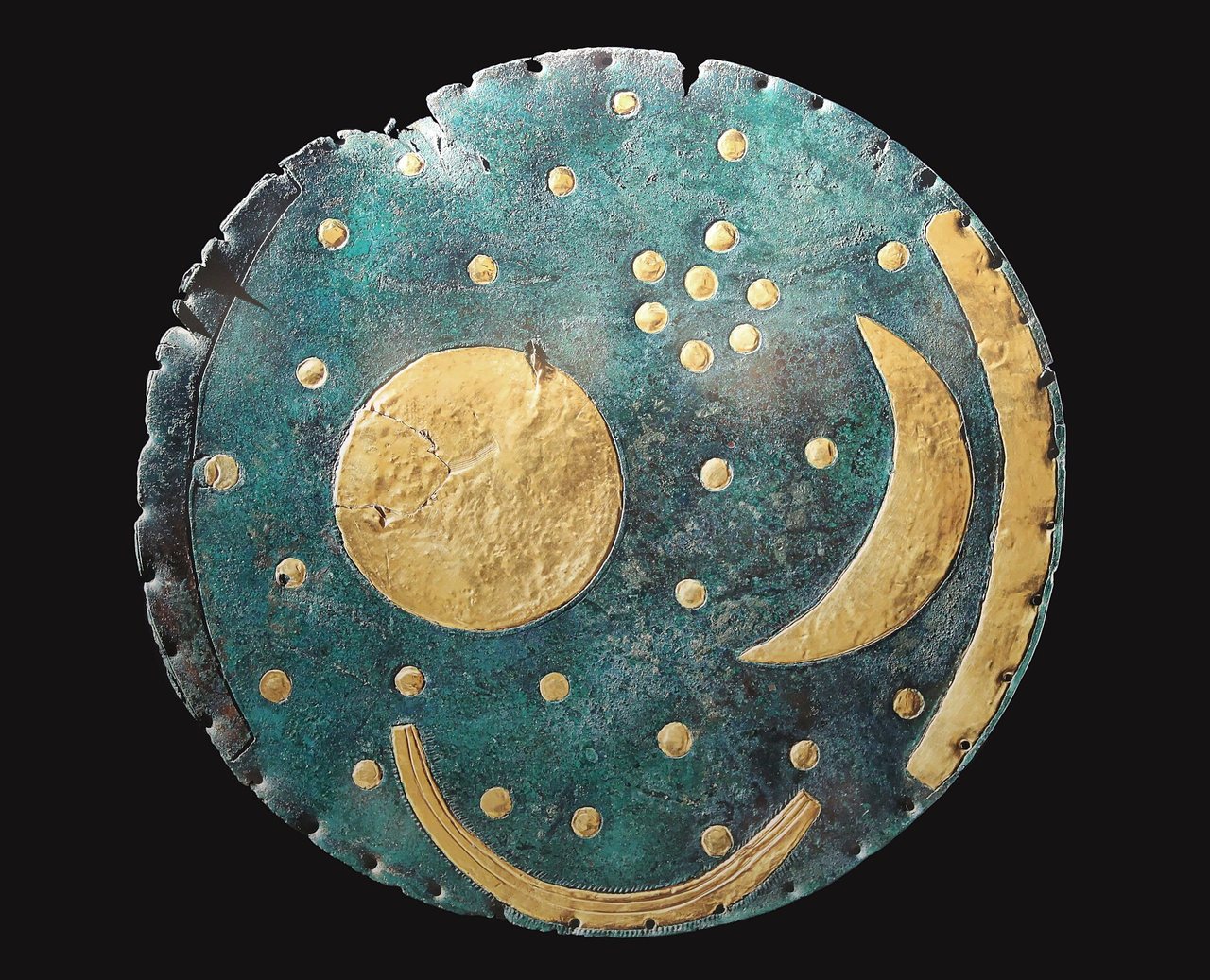
On November 4, the History Museum of Armenia opened the exhibition “The Nebra Sky Disc: Stellar Frequencies.” For the first time, Yerevan is showing an official replica of this bronze image of the cosmos, which is more than 3,600 years old. The original disc itself is listed in UNESCO’s Memory of the World register of documentary heritage.
At the opening, the museum’s director, Davit Poghosyan, called the exhibition a new stage in the cooperation between the museums of Armenia and Germany. The German ambassador to Armenia, Claudia Busch, spoke of the eternal bond between humanity and the cosmos.
The story of the find was told by Professor Harald Meller, director of the State Office for Heritage Management and Archaeology of Saxony-Anhalt. In 2002 he led the operation to recover the artifact from the black market. “In 1999, looters found the disc with a metal detector. Because they had no idea what they were dealing with, the disc still bears scratches: they tossed it into a trash bucket and tried to clean it with steel wool,” the professor said.
According to Meller, the disc’s value lies in its uniqueness. It is not merely a picture of constellations but a “cool, scientific” representation of the sky, with no counterpart anywhere in that era. The professor recalled showing the disc to several Nobel laureates in physics, who concluded that it had been made by “one of them,” meaning a scientist rather than an artist. A few years ago, the German astronaut Matthias Maurer took a lightweight replica of the disc into orbit, symbolically returning it to space.
The disc’s materials speak to the far-reaching connections of the Bronze Age. Its gold and tin were brought from the Cornwall peninsula, its copper from the Alps, and the knowledge needed to create it came from the East. The exhibition is accompanied by Enigmata, a sound installation by the composer Vardan Harutyunyan. It runs through November 29.