Figure
9.2 km
diameter of Nadir crater in the Atlantic off Guinea
Figure
9.2 km
diameter of Nadir crater in the Atlantic off Guinea
Figure
48%
drop in the length of eastern Baltic cod over 25 years
Figure
4%
of ancient American dog genes live on in Chihuahuas, coyote traces too
Figure
6
generations it took Siberian foxes to seek out human friendship on their own
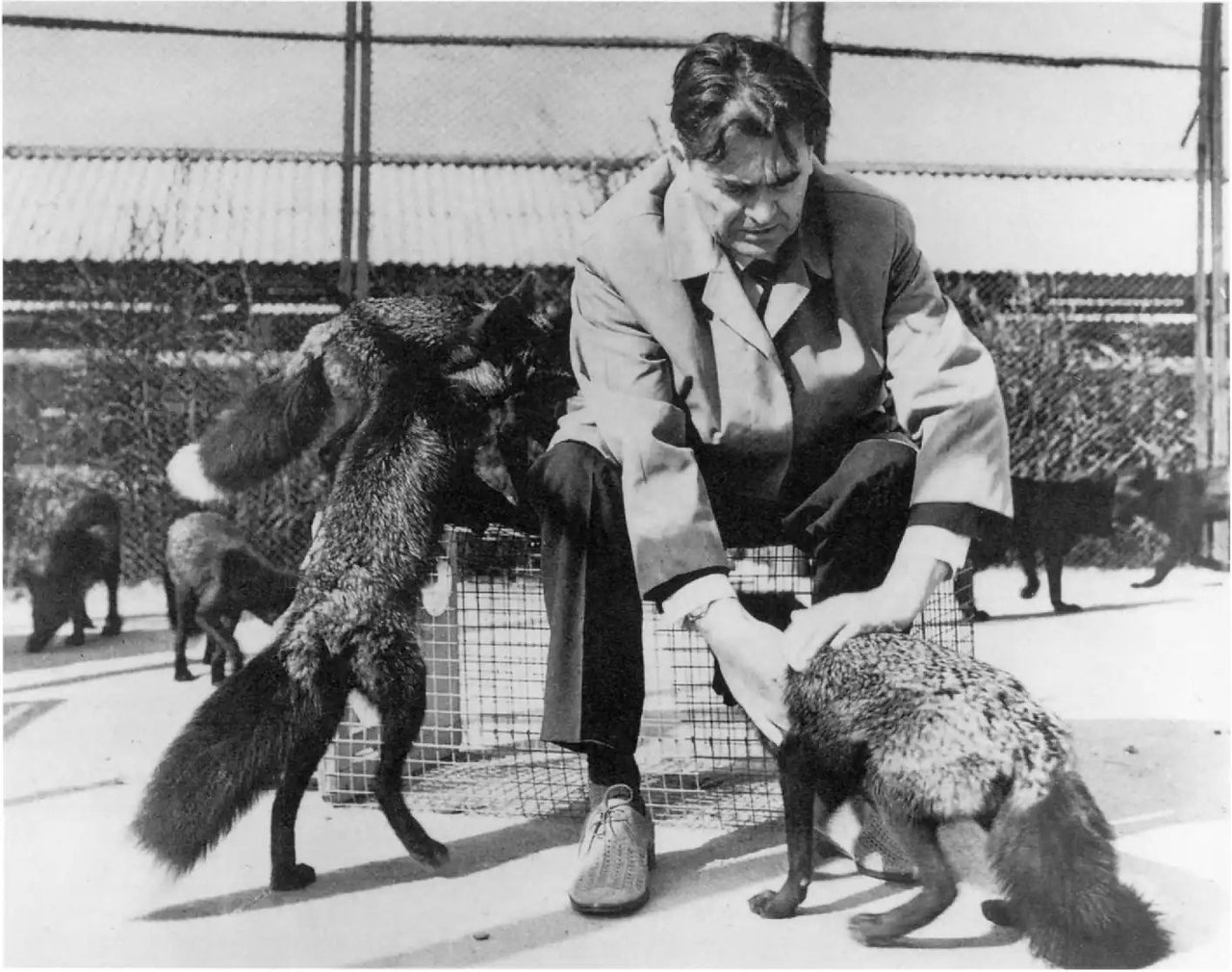
In the late 1950s, the Soviet geneticists Dmitry Belyaev and Lyudmila Trut began an experiment in Siberia on the breeding of silver foxes. In every generation, they mated only those individuals that showed the least fear and aggression toward people. Within six generations, some of the kits had begun seeking out human contact on their own, and over time they began to show traits characteristic of dogs, such as floppy ears.
Nearly seventy years later, researchers at Cornell University studied the brains of the foxes from this experiment. They compared samples from three friendly individuals, three aggressive ones (a line of this kind had also been bred in the course of the experiment) and three wild ones. The scientists focused on the ventromedial hypothalamus, a small region of the brain involved in regulating aggression. As the study’s senior author, Eirene Markenscoff-Papadimitriou, explained, the scientists wanted to understand what in the brain lies behind such rapid changes in behavior.
It turned out that in this region of the brain the tame foxes have fewer of the neurons associated with the expression of aggression than their hostile relatives do. This allows scientists to suggest that changes in the neural circuits responsible for aggression may have played a role in the transformation of wolves into dogs.
The researchers’ conclusions are also supported by the results of a recent genetic analysis of nearly two thousand dogs. It showed that selection for lower aggression and fear was common to all the major breed lineages and took place in the early stages of domestication.
It was previously believed that selecting for docility inevitably produces a set of changes in outward appearance, which was dubbed “domestication syndrome.” A 2020 scientific review, however, called this idea into question. It found that some of the traits considered new may have been present in the foxes before the experiment began. The new study points to a group of neurons that may be the key to understanding how the friendship between humans and dogs began.

Scientists at Stanford University have found coyote DNA in the genes of Chihuahuas. Their study was published in the journal Nature Communications. The discovery was made purely by chance, while the researchers were testing a new algorithm for analyzing the origins of species. Other breeds show almost no such traces.
The Chihuahua’s lineage goes back to the techichi, a small, barkless companion dog that was domesticated by the Toltecs about a thousand years ago. That breed has since died out. According to the geneticist Alexander Ioannidis, one of the study’s co-authors, modern Chihuahuas retain about four percent of the genes of those pre-Columbian dogs. That share contains the coyote DNA fragments, left over from ancient crossbreeding between local dogs and coyotes.
An international group of scientists has presented evidence that a second large asteroid fell to Earth during the era when the dinosaurs died out. Using seismic scanning, the researchers studied in detail a structure on the floor of the Atlantic Ocean off the coast of Guinea, hidden beneath a 300-meter layer of water and seabed sediments. The results of the three-dimensional survey have been published in the journal Nature Communications.
The crater, named Nadir, is almost perfectly round and measures 9.2 kilometers in diameter. According to calculations, it was left by a celestial body about half a kilometer across that entered the atmosphere at a speed of more than 72,000 kilometers per hour. The impact occurred about 66 million years ago, at the same time as the Chicxulub asteroid struck the Yucatán Peninsula.
Nadir is much smaller than Chicxulub, whose diameter reaches 180 kilometers. But the collision with the ocean triggered a tsunami more than 800 meters high, which crashed down on the coasts of present-day Africa and South America. Scientists are considering several versions of what happened: fragments of a single asteroid that had broken apart, the passage of Earth through a cluster of space bodies, or mere coincidence. To clarify the details of the catastrophe, scientists plan to drill into the seabed near the crater to analyze rock samples.
Since preindustrial times, commercial fishing has removed nearly half of the world’s biomass of commercial species, and stocks are shrinking in almost every climate zone. But the $400 billion global industry is affecting the molecular biology of fish. It drives evolutionary shifts and reduces the genetic diversity of populations.
The genomicist Craig Primmer of the University of Helsinki has shown that, under artificial selection, fish can become smaller and less inclined to explore within a few generations. Similar changes are seen in commercial species. According to German scientists, over 25 years of observation the body length of eastern Baltic cod shrank by 48%, and its genetics shifted toward slower growth.
A new study in the Mediterranean confirms these findings at the epigenetic level. Epigenetics studies reversible changes in how genes work that leave the DNA itself unaltered. Scientists compared razorfish populations at sites open to recreational fishing and in nearby marine reserves off the Balearic Islands, where anglers can take up to 60% of the local population in the first few days of the season. Fish from fished areas and from reserves turned out to differ in epigenetic markers governing immunity, development and other functions. As a result, says Margarida Barceló-Serra, a co-author of the study, “we are making populations less resilient to what lies ahead.”