Wednesday, 4 November 2026Issue of 1 November
Vietnamp. 3 of 12

To Long Thanh by Bus
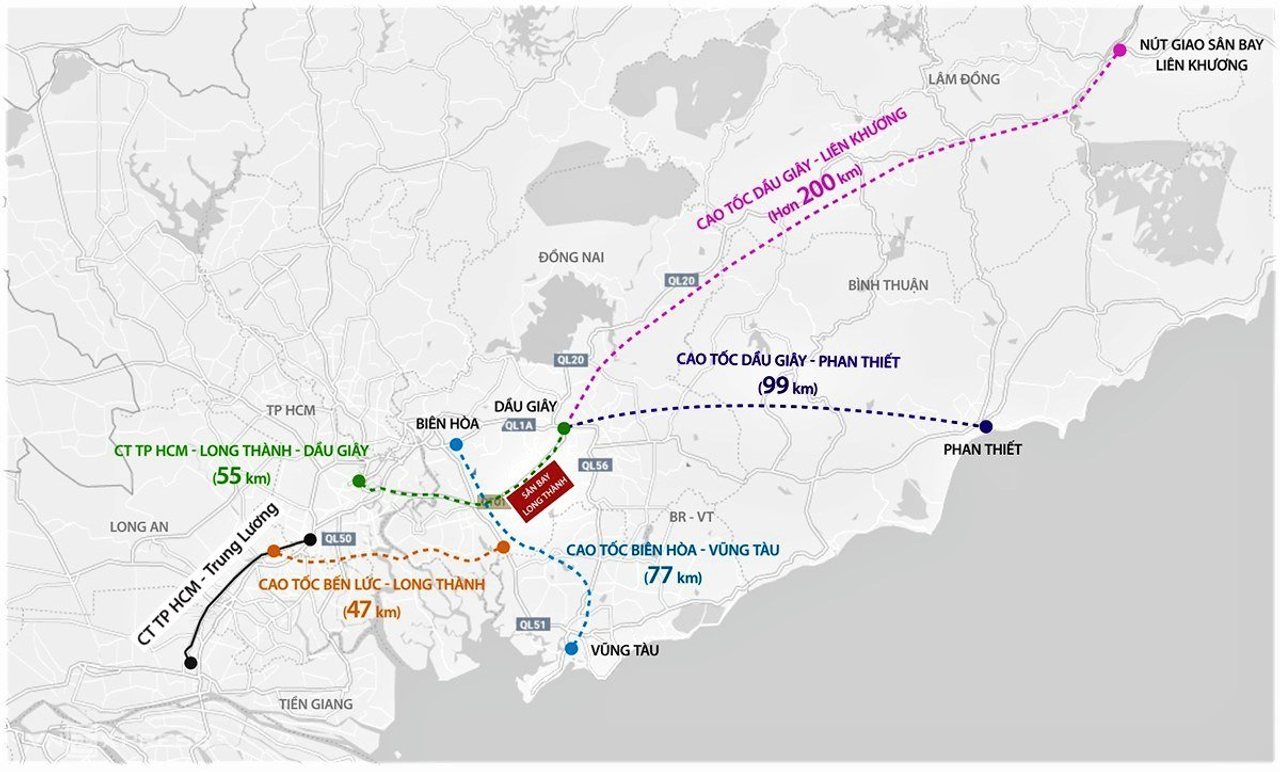
Expressways around Long Thanh Airport. Map: Hwipadam, Wikimedia Commons

The new Long Thanh International Airport in Dong Nai province is scheduled to open for commercial flights at the end of the year. A rail link will follow later, so for the first few years, access from Ho Chi Minh City will be by road. The Airports Corporation of Vietnam (ACV), along with city and provincial authorities, is preparing a network of buses, shuttles, and public transport. ACV says the airport’s operations will depend heavily on this road access, as most international passengers are expected to come from Ho Chi Minh City and its surroundings.

Two routes are under consideration. The first runs along the Ho Chi Minh City–Long Thanh–Dau Giay Expressway via the Nhon Trach Bridge, Ring Road No. 3, and National Highway 25C. The second uses the same expressway, exiting onto the Bien Hoa–Vung Tau Expressway to the airport interchange. Agencies and local authorities are studying how to organize traffic, manage vehicle flows, and introduce high-capacity transport to make the airport journey convenient, safe, and predictable in terms of time.

For passengers needing to transfer between flights, shuttles will run between the old Tan Son Nhat airport and the new one via expressways. Their schedules will be coordinated with flight times, especially during peak hours. Buses and shuttles are to operate around the clock to serve passengers, crews, and airport staff. ACV proposes giving them priority at key interchanges to ensure travel times are not affected by traffic, and creating a network of stops in cities with unified signage to make them easy to find.

The construction of Long Thanh was approved in 2015, with the project costing more than $16 billion. This year marks the final phase, which involves integrating infrastructure, equipment, and technology into a single system and conducting trial operations to test the airport.
Eifman Presents ‘Onegin’ in Hanoi

The St. Petersburg Boris Eifman Ballet presented “Eugene Onegin” at Hanoi’s Vietnam-Soviet Friendship Labour Cultural Palace from Oct. 28 to 31, after four performances in Ho Chi Minh City. This is the company’s second consecutive year touring Vietnam; it brought “Anna Karenina” in 2025.

Eifman choreographed the ballet in 2009, moving Pushkin’s characters from the 19th century to the present day. The score pairs Tchaikovsky’s melodies with rock compositions by Alexander Sitkovetsky. On opening night, Artem Lepkov danced Onegin and Victoria Mokrousova danced Tatiana.

Tour director German Gureev told journalists that Hanoi had changed noticeably in a year and he was impressed by the city’s pace of development. The theatre’s principal soloist, Lyubov Andreeva, said Hanoi is now quite ready to host large touring companies.

A Photo Isn’t Worth Your Life

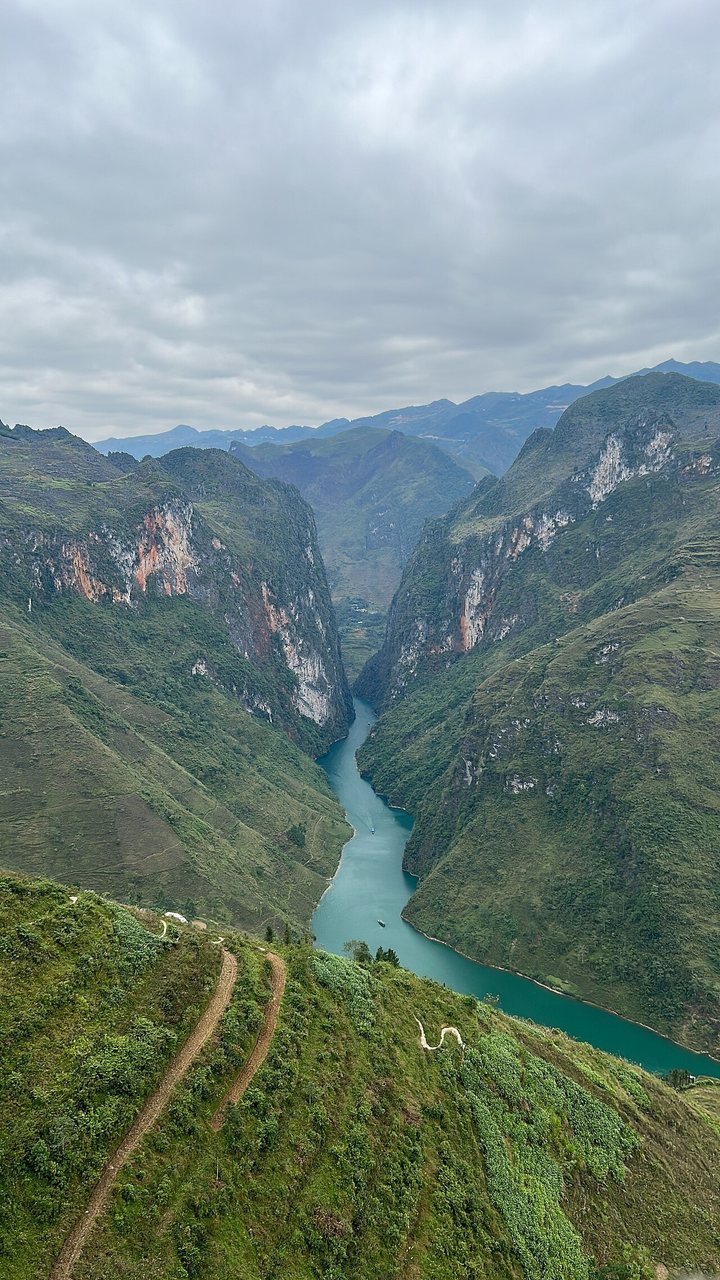
The Nho Que River gorge near the Ma Pi Leng Pass, Ha Giang Province. Photo: MapStaringEnthusiast, Wikimedia Commons, CC BY-SA 4.0

The Vietnam National Authority of Tourism has released emergency safety recommendations for travelers following two accidents involving foreigners in late October. In both cases, people suffered injuries while attempting to take a dramatic photo in a hazardous location.

On Saturday at Cape Lung Cu in Ha Giang province, a man seeking a panoramic view climbed over a fence and stood on a half-meter-wide concrete railing. He lost his balance and fell into a 300-meter abyss. Military rescuers descended into the gorge and brought him up alive. The next day, in a forest near Da Lat, a tourist from Malaysia stepped off a trail for a photo and fell into a karst sinkhole about ten meters deep that was hidden by grass and pine needles. It took rescuers two hours to get her out before she was taken to the hospital with broken bones.

Bui Thanh Tu, a travel company marketer, linked such incidents to social media in the newspaper Tuoi Tre. He said that in their pursuit of the perfect shot, independent travelers underestimate risks and fail to notice stones made slippery by dew, sudden gusts of wind, or their own inexperience. “The ideal trip is not one where you took the craziest picture, but one from which you returned home safe and sound,” he says.

In the northern provinces near the Chinese border, strict rules are in effect: launching drones and approaching border structures without a special permit is prohibited. In addition, tourists are advised to beware of street thieves who snatch bags from passersby and tear phones from their hands while on the move.

Flu Shot for Those Over 60

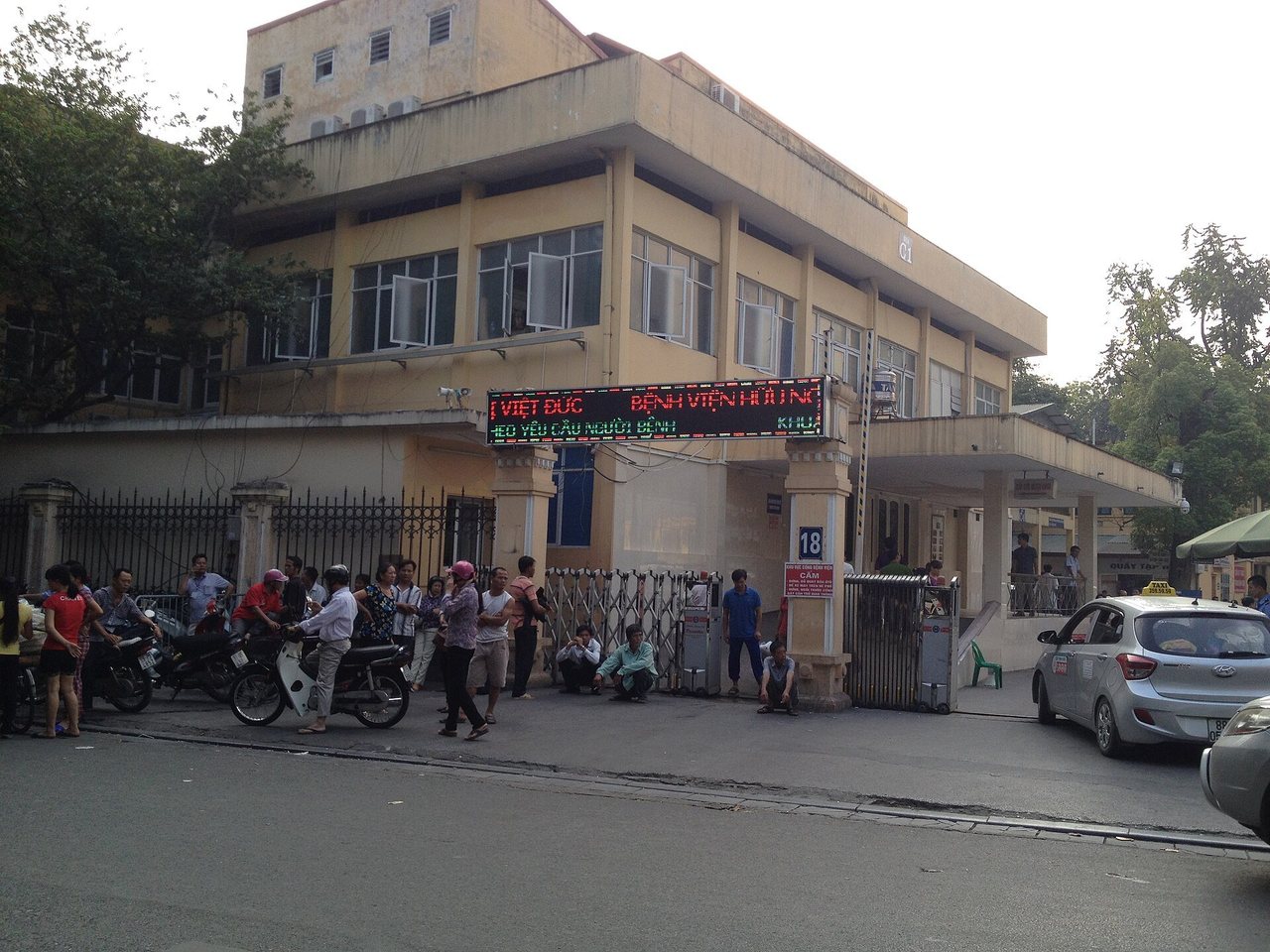
Sanofi flu vaccine for people over 60 now available in Vietnam
Photo: Phan Minh Tuấn, Wikimedia Commons, CC BY-SA 4.0

Since October 30, a new vaccine from the French company Sanofi, created specifically for people over 60, has been available at VNVC vaccination centers throughout Vietnam. It contains four times the antigens—the substances the immune system responds to—of a standard dose. As VNVC medical director Bach Thi Chinh explained, the immune system weakens with age and responds less effectively to vaccination, so a higher dose should elicit a stronger response. This is especially important for those with chronic heart disease, lung conditions, or diabetes, as they are most likely to develop complications from the flu.

In clinical trials, the new vaccine proved 24.2% more effective than the standard one. It protects against three strains—A/H1N1, A/H3N2, and B/Victoria—whose composition is updated annually based on recommendations from the World Health Organization. By September 2025, more than 360 million doses had been used worldwide, and the drug is recommended for older adults in the US, Canada, Germany, France, and two dozen other countries.

Within the first few hours, hundreds of people had registered and received the shot at nearly 300 VNVC centers. Dao Thi Suong, 63, from Ho Chi Minh City, gets a flu shot every year and says she has been sick less often since she started; she advises her peers not to delay vaccination. Tran Thi Hong Loan, 60, who suffers from asthma, chose the new vaccine hoping to avoid a severe case of the flu, which could trigger an attack for her.

According to the WHO, about a billion people worldwide get the flu each year. Of these, 3–5 million cases are severe, and 290,000 to 650,000 people die from complications. The flu can trigger a heart attack or stroke, and for people with heart and lung disease, the risk of dying from it is 5 to 20 times higher than for others.