Gold and an Augustan Coin in Metsamor
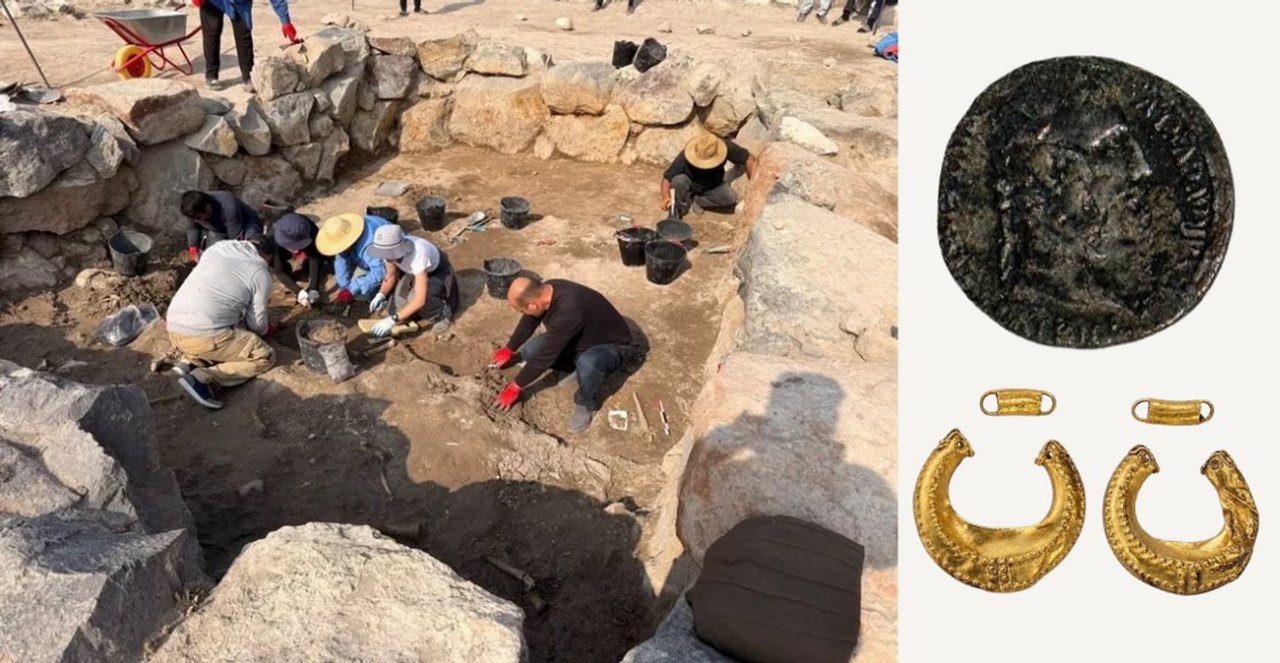
Archaeologists working at the ancient settlement of Metsamor in Armenia’s Armavir province have unearthed gold jewellery, a bronze dagger and a silver coin of Octavian Augustus, the first emperor of Rome, who reigned from 27 BC to 14 AD. The discovery was announced by Zhanna Andreasyan, Armenia’s minister of education, science, culture and sport.
Excavations on a private plot of land near the Metsamor Museum-Reserve began two years ago. At the centre of the plot stands a stone mausoleum with a tomb chamber measuring approximately six by four metres, encircled by a cromlech—a ring of vertical stones about 20 metres in diameter. Judging by the layers, the tomb was in use for 1,500 years. The oldest burial, found at the floor of the chamber, dates to the Late Bronze Age (14th–13th centuries BC). It contained a Lchashen-type dagger, a large amount of pottery, horse bones, belt fragments, bronze items and bell-shaped pendants. Above it lies an Iron Age burial of a single person with offerings and pottery, while the top layer, a 1st-century AD burial, held the Augustan coin and the gold.
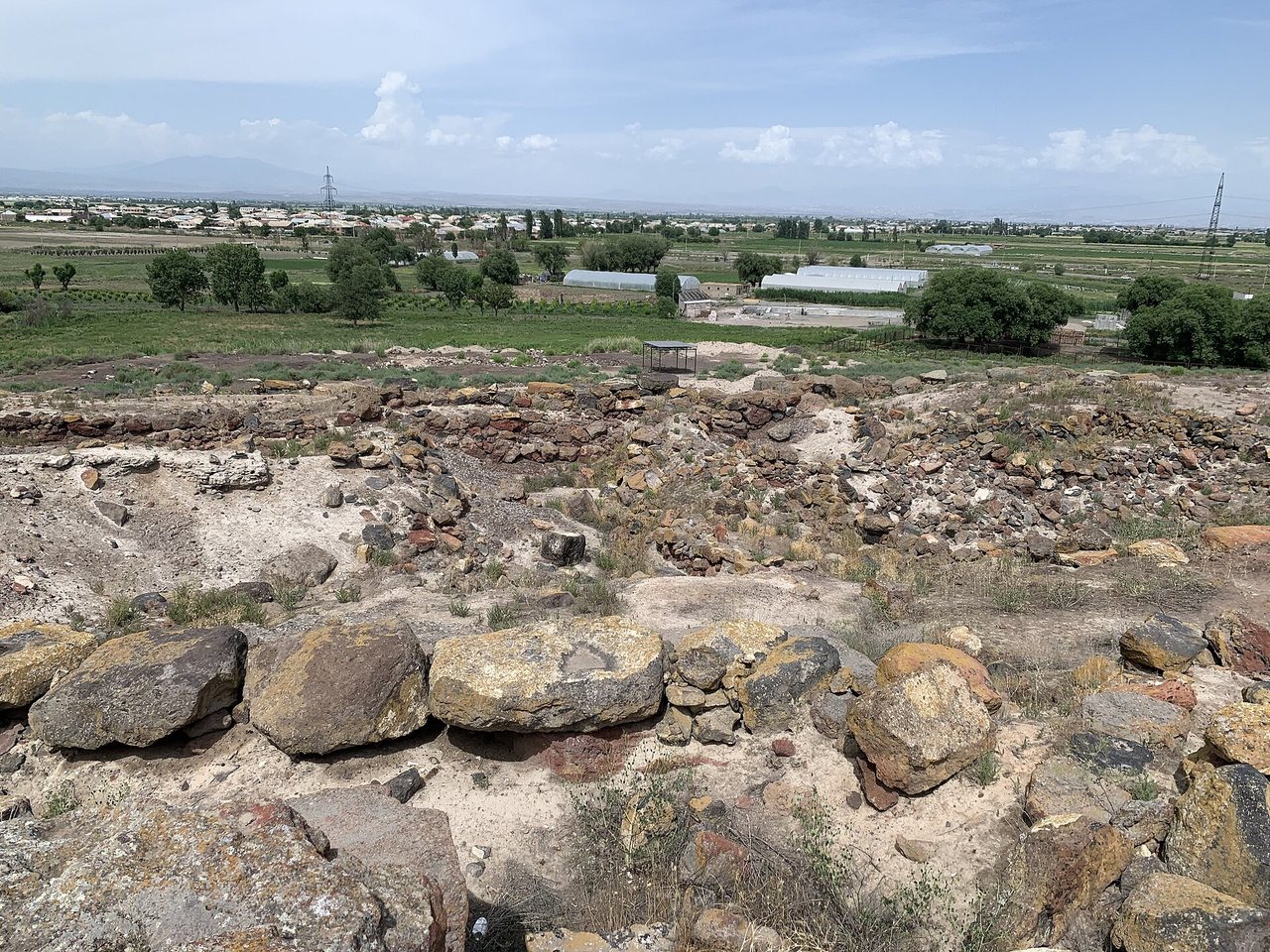
Metsamor, located on the Ararat Plain 35 kilometres west of Yerevan, was founded at the turn of the 5th and 4th millennia BC and was inhabited, with some interruptions, until the Middle Ages. In its heyday, during the late Bronze and early Iron Ages, the city covered an area of almost 100 hectares. It lost its former greatness after a military campaign by the Urartian king Argishti I, founder of Erebuni, in the 8th century BC.
The Roman coin is a reminder of a period when Armenia was closely tied to Rome: in 20 BC, Emperor Augustus established a protectorate over the Armenian kingdom. The find confirms that Metsamor stood for a long time on the trade routes connecting East and West. The excavations are ongoing.