The Body Before the Word
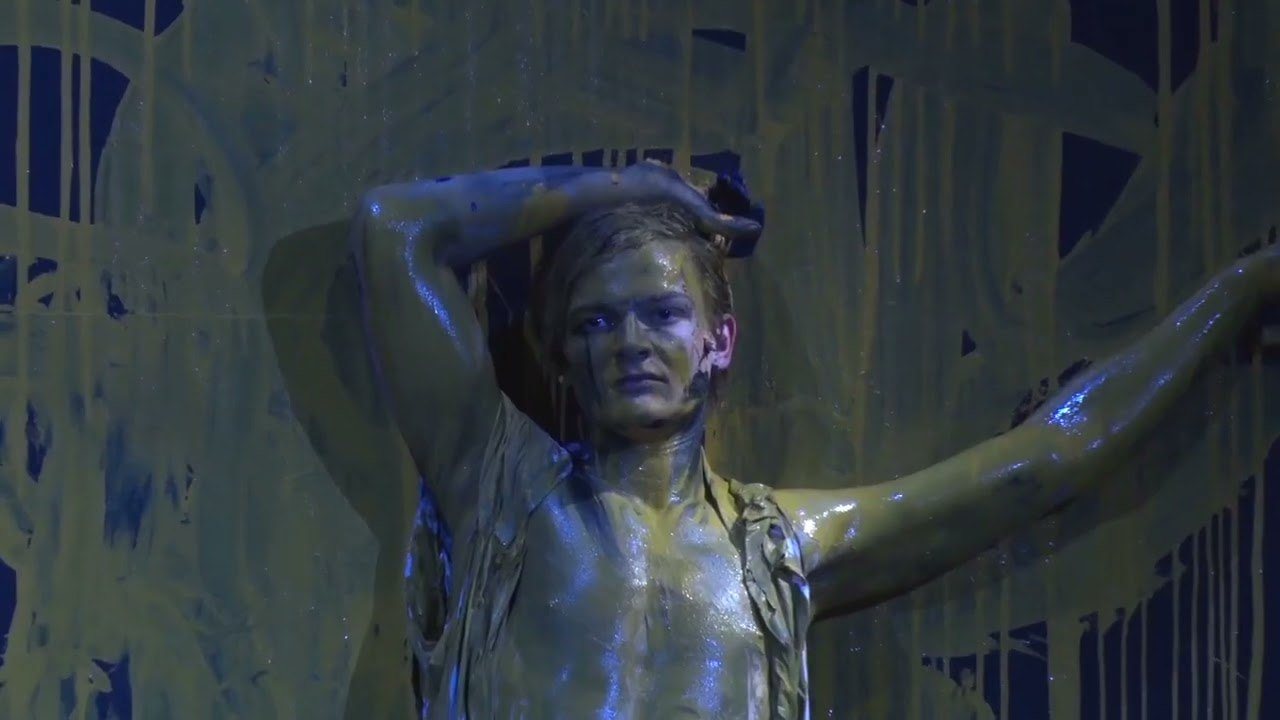
The body loses its balance, senses danger, resists another body or yields to a force it cannot overcome—all this happens before a person can explain it to themselves. This knowledge is not entirely rational and cannot be described in words: the body perceives the world before the mind can form experience into a story. This is the domain of Belgian choreographer Wim Vandekeybus. On October 24, his company Ultima Vez brought its production ‘Infamous Offspring’, which combines dance, poetry, music and film, to Tbilisi’s Griboedov Theatre for the 29th GIFT International Arts Festival.
Vandekeybus founded Ultima Vez in the mid-1980s, and his very first major work, ‘What the Body Does Not Remember’ (1987), established his signature style: physical unpredictability and movement that seems dictated by instinct rather than a pre-written plot. In his theatre, movement is not a set of pretty steps but a dramatic and philosophical statement. Over time, text and narrative were introduced into his productions, but the body has always remained central: the story unfolds through it, rather than being illustrated by it.
The new performance draws on Greek mythology, not as a collection of ancient tales, but as a living system of desire, rivalry and family conflicts. At the centre of the pantheon are Zeus and Hera, surrounded by their descendants. They appear only on screen, while their children inhabit a world their parents built, forging relationships within a framework they did not choose: Olympus turns out to be a dysfunctional family. The text was written by British poet Fiona Benson, with music by Warren Ellis, the Australian band Dirty Three and ILA. The choreographer does not subordinate these elements to a single narrative; meaning arises from the collision and accumulation of dance, word and image.
Hephaestus, the god of fire and smithing, who is rejected in myth for his disability but valued for his craft, is played by Scottish artist and contortionist Iona Kewney. Her unusual physicality does not correct the “imperfect” body but reveals its expressiveness, turning the myth into a conversation about exclusion and the terms on which society recognizes a person’s worth. For the Tbilisi audience, the performance served as an introduction to a theatre where choreography connects the body with myth, poetry and philosophy.